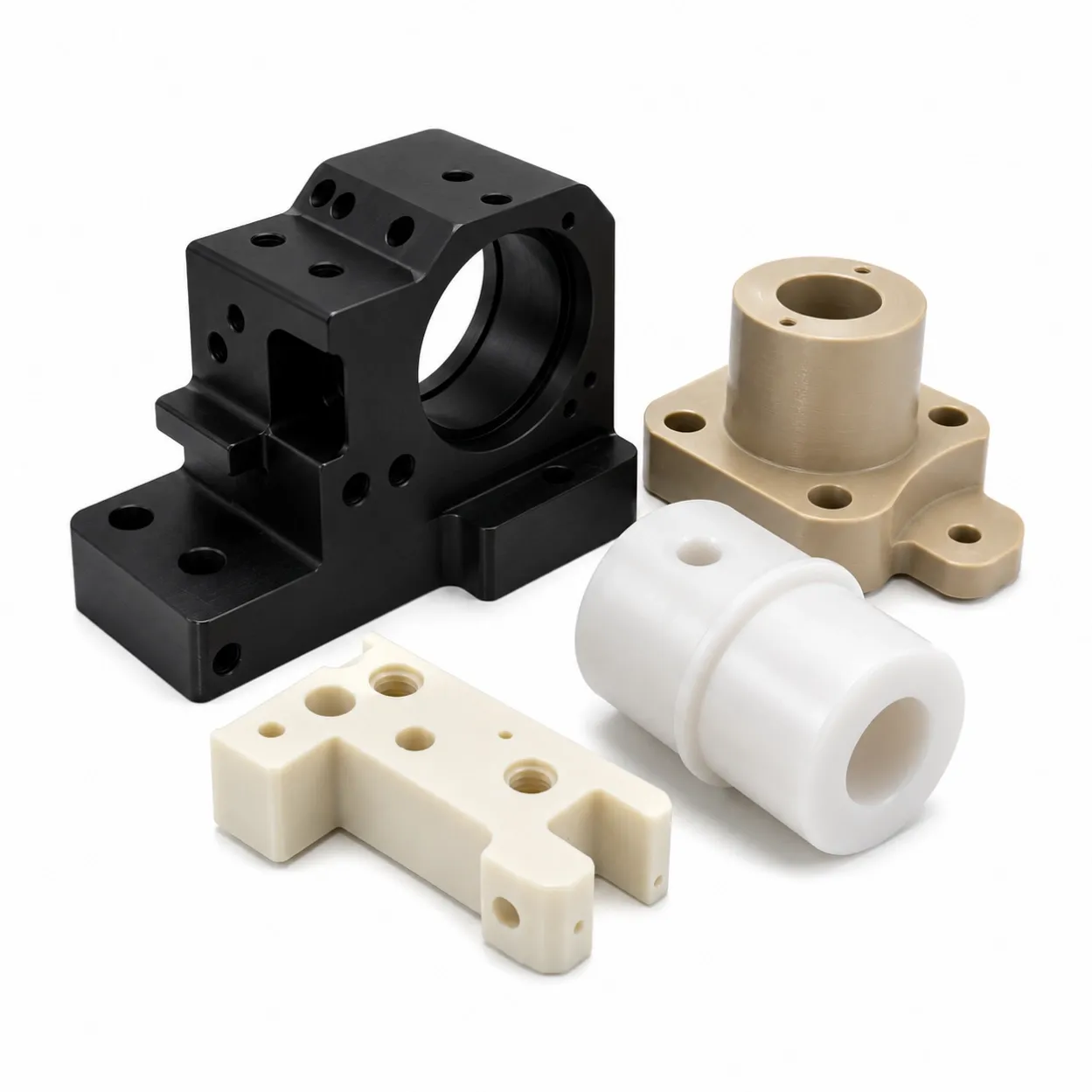
Custom CNC Machined Plastic Parts
Custom CNC machined POM, PTFE and Nylon/PA parts for prototypes and low-volume builds. Material, tolerances, inspection and documentation are confirmed per RFQ.
YSBK machines POM/Acetal, PTFE and Nylon/PA parts from customer-approved drawings and CAD files. We support prototypes, one-off replacement components, low-volume requirements and repeat small batches.
For a useful quotation, the material must be identified beyond the word “plastic.” The exact grade, filler or reinforcement, part geometry, critical dimensions and quantity all affect machinability and dimensional stability. Raw-material availability is confirmed for every order during the RFQ stage.
Drawing and CAD Requirements Before Quotation
Send the current 2D drawing together with a matching STEP or STP file when both are available. The package should identify:
- Exact plastic material, grade and any filler or reinforcement
- Part number, drawing revision and quantity
- Critical dimensions, fits, datums and applicable tolerances
- Threads, bores, locating features, sealing surfaces and mating interfaces
- Required inspection records, photographs or material documents
- Delivery requirements and expected repeat quantity, where relevant
A 3D model defines geometry, but it may not communicate every acceptance requirement. Use the 2D drawing for tolerances, threads, surface requirements and inspection notes. If the drawing and CAD model conflict, identify the controlling file and revision before quotation. See our guide to 2D drawings and 3D CAD files for CNC quotations.
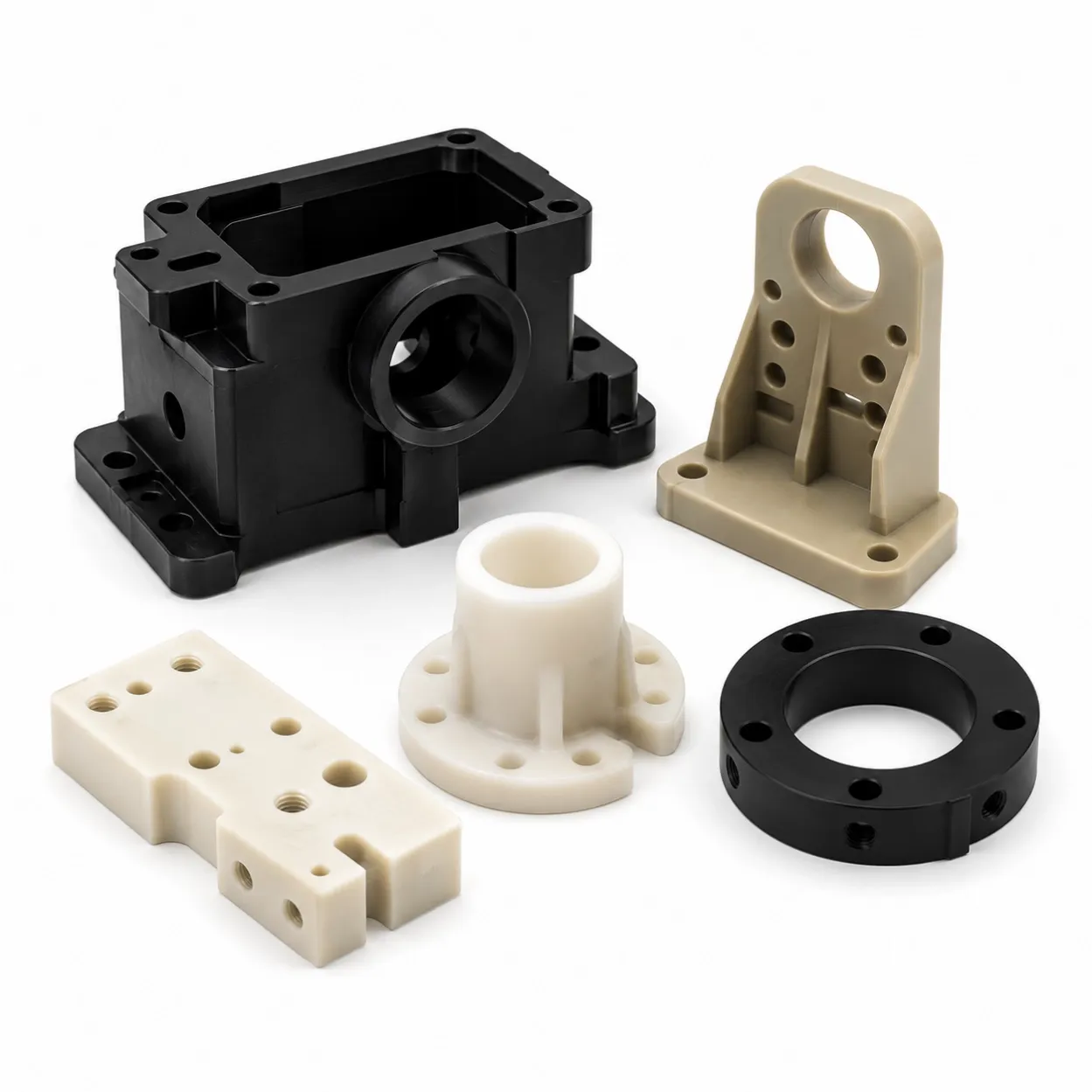
Engineering Plastics Reviewed Per Order
YSBK machines POM/Acetal, PTFE and Nylon/PA to customer drawings. Filled and modified grades, including glass-filled nylon, can also be reviewed when the exact material designation is provided. Raw-material stock and supply feasibility must be confirmed per order. We do not substitute one plastic grade for another without customer approval.
POM / Acetal
POM is often specified for bushings, spacers, guides, blocks and other mechanical components where low friction and dimensional consistency are important. Stock condition, wall thickness and the amount of material removed still affect the final result, so critical features should be identified on the drawing.
PTFE
PTFE is comparatively soft and can recover after clamping or cutting. A dimension measured while the part is restrained may differ from the free-state dimension. Drawings should therefore define the inspection condition for important bores, thicknesses and sealing features.
Nylon / PA
Nylon can be suitable for wear components and functional mechanical parts, but moisture absorption can change dimensions. State the exact PA grade, reinforcement and any conditioning or inspection requirement that matters to assembly.
PEEK Requirements
PEEK has its own material, warping and inspection considerations. For PEEK projects, see our dedicated Custom PEEK Machined Parts page. If you are comparing materials, review POM, Nylon, PTFE and PEEK for CNC machining.
Why Plastic Tolerances Require Part-Specific Review
There is no single machining tolerance that applies to every engineering-plastic part. Feasibility depends on the exact grade and filler, stock condition, overall size, wall thickness, feature geometry, material removal, cutting heat, workholding and inspection condition.
Thin walls, large pockets, deep bores and flexible features can move after unclamping. PTFE may recover elastically, while nylon may change with moisture and temperature. Tight tolerances should be applied to the dimensions that control fit or function rather than to every feature by default.
For critical requirements, define whether the part is inspected free, restrained or assembled, and state any temperature or conditioning requirement that affects acceptance.
Threads, Bores and Assembly Features
Threads, press fits, bearing seats, locating holes and sealing surfaces need material-specific review. Provide the mating-part requirement, thread designation, engagement length and fit where these features affect assembly. Inserts or secondary hardware should be identified during RFQ rather than added after quotation.
Inspection and Documentation Scope
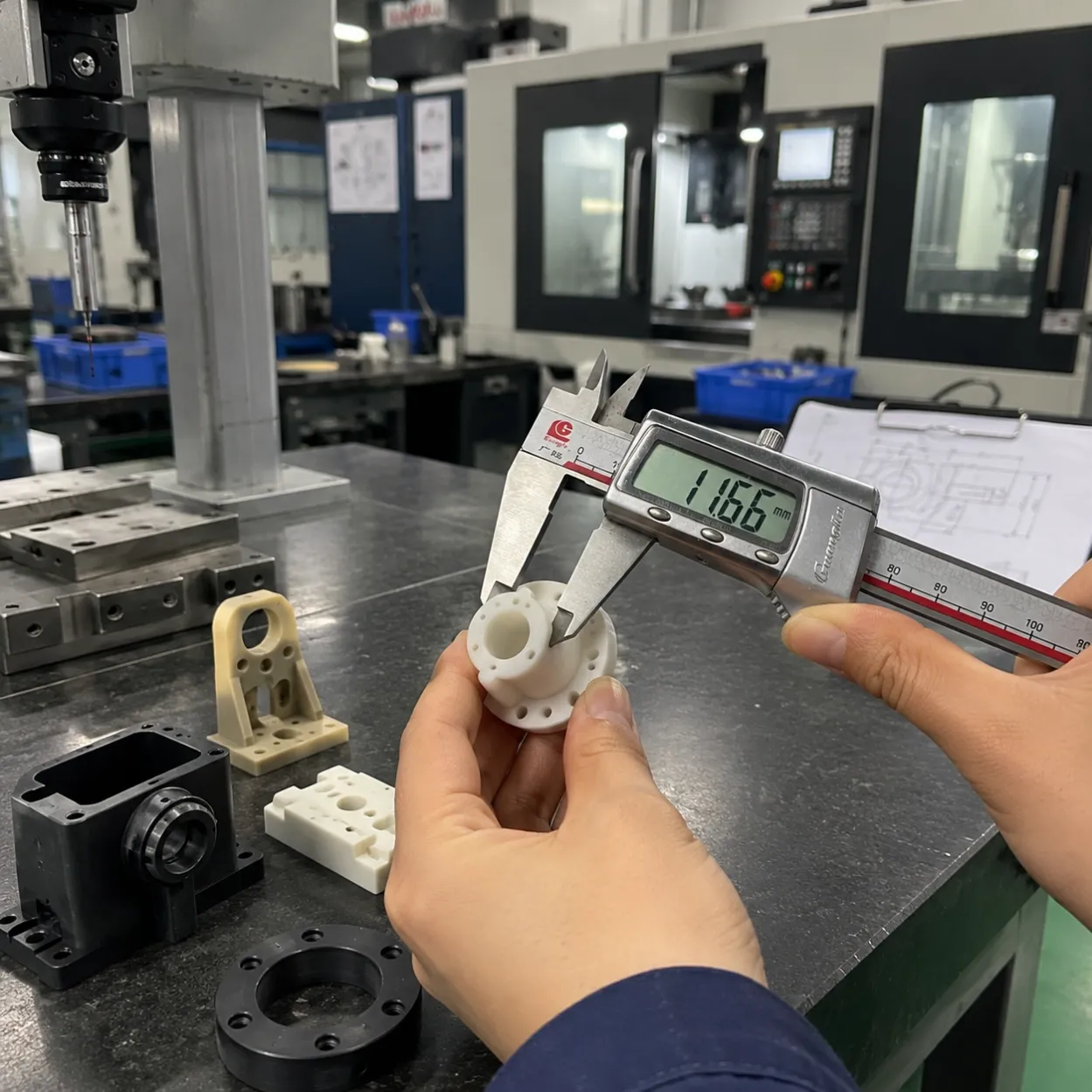
Basic dimensional verification uses calipers, micrometers, depth gauges and height gauges. Inspection records cover only the critical dimensions agreed from the drawing.
First-part photographs and key-dimension records must be requested and agreed during the RFQ stage. They are not included automatically. YSBK does not have in-house CMM or optical measuring equipment, and full-dimensional or CMM reports are not provided by default.
Material certificates are issued by raw-material suppliers. Certificate, lot-traceability or other material-proof requirements must be confirmed per order during RFQ and are not automatically included with shipment.
From Initial Parts to Repeat Production
If the design and file revision remain unchanged, the customer may confirm in writing that the approved drawing and STEP file continue to control the repeat build. The confirmation should identify the part number and revision.
Manual grinding, trimming or other trial adjustments made to a prototype are not an approved production definition. If that condition must be carried into the next batch, update and approve the drawing and matching CAD file before production.
What to Send for a Plastic Machining RFQ
- 2D drawing and matching STEP/STP file
- Exact POM, PTFE or Nylon/PA grade and filler
- Part number, revision and quantity
- Critical dimensions, fits, threads and mating features
- Free-state, restrained or assembled inspection condition where relevant
- Required photographs, dimensional records or material documents
- Required delivery date and expected repeat quantity
Request a CNC Plastic Part Review
Send the approved drawing and CAD file with the material grade, quantity and critical requirements. We will review manufacturing feasibility and identify questions that must be resolved before quotation. Material selection, design approval and suitability for the complete assembly remain with the customer.
Drawing/CAD · Material Grade · Quantity · Critical Tolerances · Inspection Requirements