CNC Machined Parts
Custom Machined Housings for Industrial Equipment
Custom machined housings for industrial equipment and automation, manufactured from your drawings and CAD files for prototype and low-volume projects.
YSBK Parts manufactures custom machined housings from customer-supplied 2D drawings and 3D CAD files for industrial equipment, automation systems, custom machinery and engineering projects.
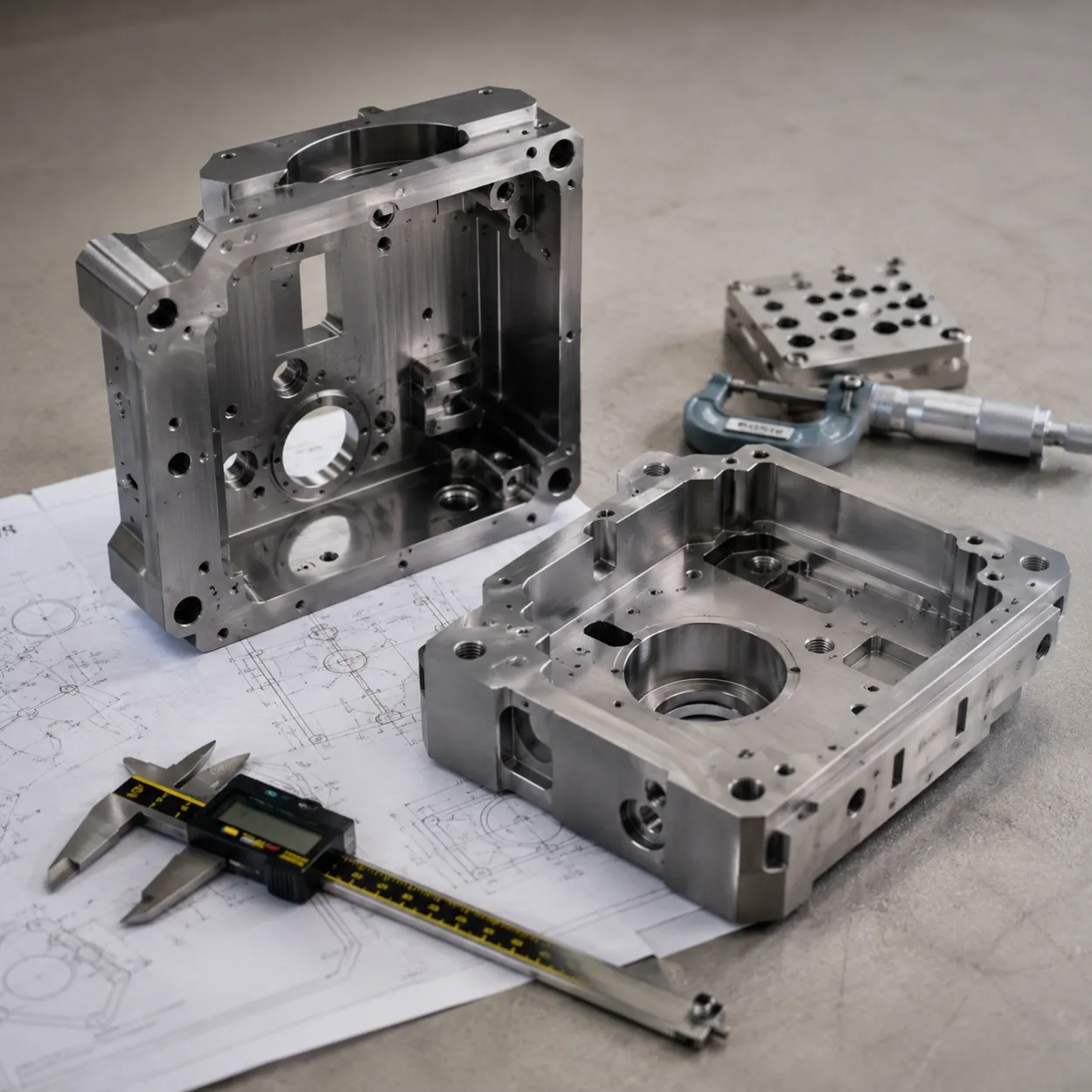
We support one-off, prototype and low-volume housings with machined cavities, precision bores, mounting surfaces, threaded features and other interfaces that must fit existing or newly designed assemblies.
If your housing is already designed, send us the drawing or STEP file for manufacturing review and quotation.
Machined Housings Built to Your Engineering Drawings
A custom housing often does more than protect the components inside it.
It may locate bearings, support shafts, position sensors or actuators, provide mounting references, or establish the relationship between several components in an assembly.
That makes the interfaces between features more important than the appearance of the housing itself.
We manufacture housings to customer-defined engineering requirements rather than providing standard enclosure designs. Projects are best suited to us when the part geometry, material and critical requirements are already defined in a 2D drawing, 3D CAD model or STEP file.
Typical projects come from equipment builders, automation companies and engineering teams that need a non-standard housing manufactured for a specific machine or assembly.
Housing Features We Commonly Review
Custom machined housings can combine several functional features in one component, including:
- internal cavities and machined pockets;
- precision bores and bearing locations;
- mounting faces and reference surfaces;
- threaded holes and inserts;
- counterbores and recessed features;
- complex hole patterns;
- locating and mating features;
- slots, channels and access openings;
- features machined from multiple sides.
For quotation, the most useful drawings distinguish between general dimensions and the features that actually control fit, location or assembly.
For example, a housing may have generous clearance around an internal cavity while requiring tighter control between a bearing bore and a mounting reference.
Understanding that distinction helps us review the manufacturing approach without treating every dimension as equally critical.
For Industrial Equipment, Automation and Custom Machinery
Our focus is on drawing-based housings used as part of a larger engineered assembly.
Typical applications include housings for:
Industrial Equipment
Custom mechanical assemblies where the housing supports, locates or protects internal components.
Automation Systems
Assemblies involving sensors, actuators, shafts, bearings, motion components or other hardware that must be positioned relative to the housing.
Custom Machinery
Machine-specific housings that cannot be sourced as standard catalog components.
Engineering Development
Prototype and low-volume housings used during equipment development, testing, validation and early production.
We are not a housing design service. The best-fit projects already have engineering drawings or CAD data and need manufacturing support.
Materials for Machined Housings
Material should be selected according to the mechanical requirements of the assembly rather than the machining process alone.
Common project materials include:
Aluminum 6061
Often specified where weight, machinability and corrosion resistance are important.
Aluminum 7075
Used when higher mechanical strength is required while retaining the weight advantages of aluminum.
Stainless Steel
Suitable for housings where strength, wear resistance or corrosion resistance is a higher priority.
Other machinable materials can be reviewed when they are defined on the drawing or project specification.
Specified surface treatments such as anodizing can also be coordinated as part of the manufacturing project.
Critical Housing Features Should Be Clear on the Drawing
Housing drawings often contain many dimensions, but a smaller number usually determine whether the part will assemble and function correctly.
These may include:
- bearing or shaft bore dimensions;
- bore-to-bore position;
- mounting-hole locations;
- locating surfaces;
- flatness requirements;
- mating faces;
- critical depths;
- internal clearances;
- relationships between machined features.
If a tolerance or interface is functionally important, identifying it clearly on the drawing helps us evaluate the part correctly before quotation.
The same applies to inspection requirements. If specific dimensions require documented inspection, include those requirements with the RFQ so they can be reviewed before production.
This is particularly useful for housings that locate several components within one assembly.
Prototype and Low-Volume Housing Projects
Custom housings are frequently needed before a machine or product reaches volume production.
We support projects such as:
- one-off engineering parts;
- prototype housings;
- design-validation components;
- low-volume production;
- repeat small batches.
This is a good fit for equipment builders and engineering teams that have completed the mechanical design but do not need high-volume manufacturing.
For low-volume projects, we can also flag drawing features that may create unnecessary machining complexity or cost before production.
The purpose is not to redesign the housing, but to identify manufacturing issues early enough for the engineering team to review them.
What Helps Us Quote a Custom Housing
For a manufacturing review, send the engineering information already available for the project.
The most useful RFQs normally include:
- 3D CAD or STEP file;
- 2D engineering drawing, when available;
- material specification;
- required quantity;
- critical dimensions and tolerances;
- surface treatment or finish;
- inspection requirements;
- required delivery.
A 3D model helps us understand the geometry, while the controlled drawing identifies the dimensions, tolerances and notes that govern manufacturing.
If both are available, send both.
Projects with incomplete design information may require clarification before they are ready for quotation. Our focus is manufacturing from defined engineering data rather than creating the component design from scratch.
Custom Machined Housing FAQ
Can you manufacture a housing from our STEP file and drawing?
Yes. This is the preferred type of project. Send the available CAD data and drawing together with the material, quantity and any critical manufacturing or inspection requirements.
Can you machine housings with internal cavities and precision bores?
Yes, depending on the geometry and tool access. Housings combining pockets, bores, mounting faces, threaded holes and multi-side features can be reviewed from the CAD model and drawing before quotation.
Can you manufacture one housing for an engineering prototype?
Yes. One-off components, prototypes and low-volume housing projects are within our target scope.
Can you manufacture both aluminum and stainless steel housings?
Yes. Aluminum 6061, 7075 and stainless steel are among the materials we commonly review. Other machinable materials can be evaluated according to the drawing.
Can you work from an old housing without a drawing?
Our best-fit projects have a 2D drawing, 3D CAD model, STEP file or sufficiently defined engineering specification. We do not position ourselves as a full reverse-engineering or product-design service.
Can surface finishing be included?
Yes. Specified treatments such as anodizing and other project-specific finishes can be coordinated where appropriate. Include the finish requirement with the RFQ.
Have a Housing Drawing or CAD File?
If your housing is already designed and you are looking for a supplier to manufacture it, send us the available drawing or STEP file.
Include the material, quantity and any critical tolerance, finish or inspection requirements that affect the part.
We’ll review the project for manufacturability and quotation.