CNC Machined Parts
Custom Machined Components for Tooling & Fixtures
Build-to-print CNC machined components for tooling, fixtures, automation equipment and custom machinery. One-off and low-volume parts in A2, 4140 and other engineering materials.
We manufacture build-to-print machined components for tooling, fixtures, automation equipment and custom machinery.
From one-off replacement parts to low-volume production, we work from your engineering drawings and CAD files and support materials such as A2 tool steel, 4140 alloy steel, stainless steel, aluminum and engineering plastics.
Heat treatment, grinding, black oxide, nitriding and dimensional inspection can be coordinated when required.
Send us your drawing, quantity, material and critical requirements for review.
CNC Machined Parts for Tooling, Fixtures and Custom Equipment
Tooling and automation projects often need components that cannot be purchased from a standard catalog.
A locator may require a specific profile or hardness. A custom jaw may need to match an existing assembly. A fixture component may require only two or three pieces but still include critical bores, hole positions or heat-treatment requirements.
We support custom parts for:
- Tooling and workholding systems
- Jigs and fixtures
- Checking and inspection fixtures
- Automation equipment
- Robotic tooling
- Custom machines and special-purpose equipment
- Machine repair and replacement projects
We manufacture from customer-supplied drawings, so your engineering team retains control of the design while we focus on making the parts correctly.
Typical Components We Manufacture
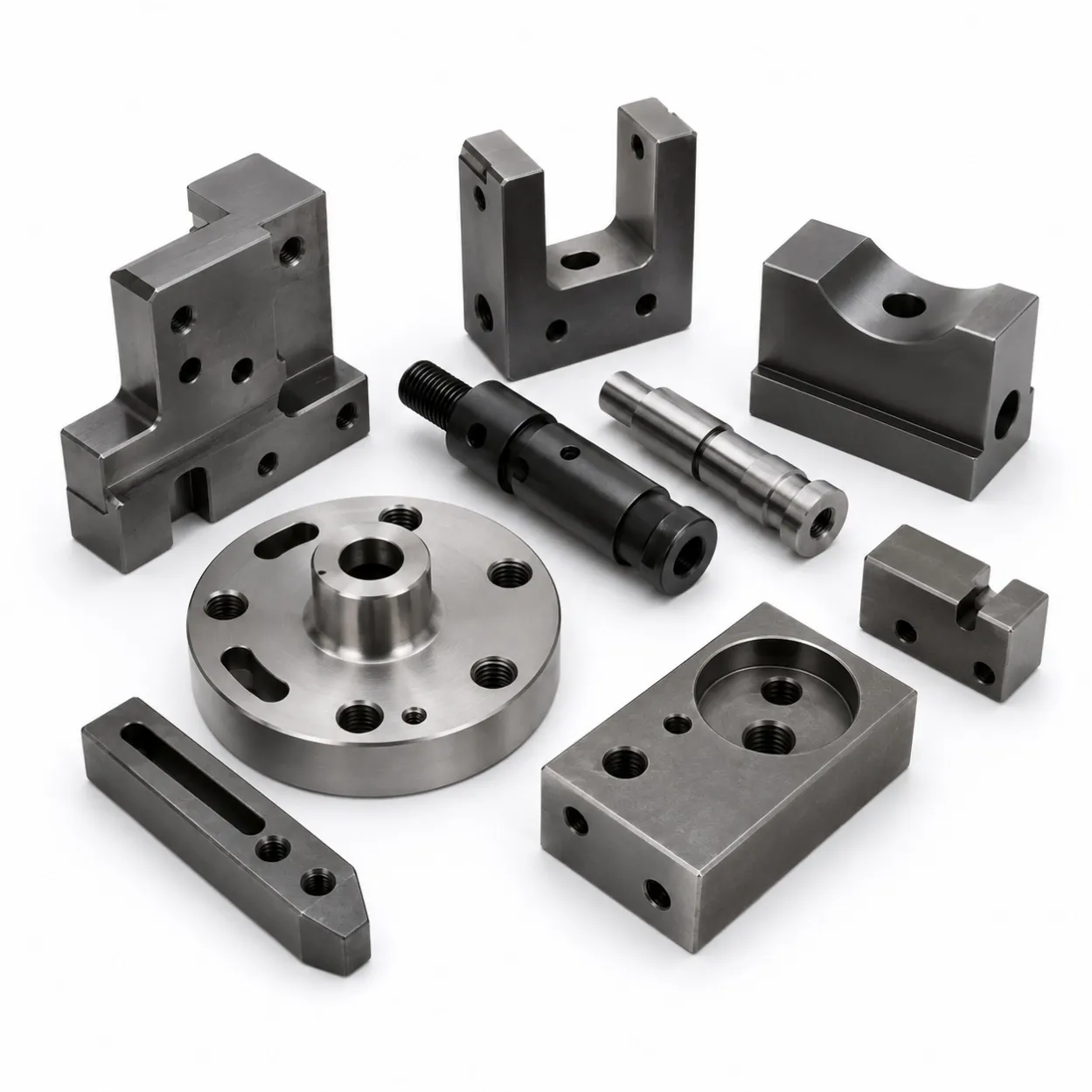
Typical build-to-print parts include:
- Locators and locating components
- Custom jaws and grippers
- Clamp arms
- Rest pads and support blocks
- Fixture plates
- Tooling blocks
- Pins and shafts
- Bushings and sleeves
- Wear components
- Custom machine components
These are examples rather than a fixed catalog. If you already have a drawing for a non-standard component, send it to us for review.
A2, 4140 and Other Engineering Materials
For tooling and fixture components, material selection is often driven by wear, strength, hardness and dimensional requirements rather than cost alone.
A2 Tool Steel/posts/low-volume-a2-tool-steel-machining
Suitable for wear-resistant tooling components and parts that require heat treatment to a specified hardness.
4140 / 4140 Pre-Hardened Steel
Used for strong, durable mechanical components such as locators, pins, shafts and other functional tooling parts.
Other Materials
Carbon and alloy steels, stainless steel, aluminum and engineering plastics such as POM can also be supplied according to the drawing.
For heat-treated parts, we review the required hardness and critical dimensions before machining so that the process sequence can be planned appropriately.
Heat Treatment and Secondary Operations
Some tooling components require more than CNC machining.
Depending on your drawing, we can coordinate:
- Heat treatment to specified hardness
- Nitriding
- Black oxide
- Grinding
- Deburring
- Surface finishing
- Dimensional inspection
- Rust protection before shipment
For parts with tight tolerances after heat treatment, critical dimensions should be identified before production. This helps determine whether machining allowance, finish machining or grinding is required.
One-Off and Low-Volume Parts Are Welcome
Tooling companies, automation builders and machine shops do not always need production quantities.
You may need:
- One prototype
- 2–10 custom components
- A small set of parts for a new fixture
- Replacement parts for existing equipment
- Revised components after a design change
- Repeat low-volume orders
These projects are a normal part of our work.
We evaluate the drawing, material and manufacturing requirements, rather than requiring a large minimum production volume.
Built From Your Engineering Drawings
If the component is already designed, send us your files and specifications.
For quotation, please provide:
- STEP / STP or other 3D CAD file
- PDF / DWG / DXF drawing
- Quantity
- Material
- Critical tolerances and GD&T
- Required hardness or heat treatment
- Surface finish
- Target delivery date
For parts with critical dimensions, heat treatment or special finishing, providing both the 3D model and 2D drawing helps us review the complete manufacturing requirements.
From Drawing to Finished Part
1. Drawing Review
We review geometry, material, quantity, tolerances and secondary-process requirements.
2. Manufacturing Planning
Machining sequence, workholding, heat treatment and finishing requirements are considered before production.
3. CNC Machining
Parts are manufactured according to the supplied drawing and agreed requirements.
4. Heat Treatment & Finishing
Required secondary processes are coordinated as part of the manufacturing plan.
5. Inspection & Shipment
Critical dimensions are checked before shipment, with appropriate protection for steel components during transportation.
Need a Custom Tooling Component Made From Your Drawing?
If you are sourcing custom machined parts for tooling, fixtures, automation equipment or custom machinery, send us your drawing for review.
Please include:
Drawing/CAD + Quantity + Material + Tolerance + Hardness/Heat Treatment + Surface Finish
We will review the requirements and respond with quotation information.
Frequently Asked Questions
Do you accept one-off and small-quantity tooling parts?
Yes. We support prototypes, one-off components and low-volume batches. Small quantities are reviewed based on the drawing, material and process requirements.
Can you machine A2 and 4140 steel?
Yes. We support A2 tool steel, 4140 and pre-hardened 4140, including parts with specified hardness and secondary-process requirements.
Can you coordinate heat treatment and grinding?
Yes. Heat treatment and grinding can be included where required. For tight dimensions after heat treatment, we review the manufacturing sequence before production.
What files should I send for a quote?
A 3D CAD file such as STEP/STP together with a 2D drawing is preferred. Please also include quantity, material, tolerances, hardness or heat treatment, surface finish and delivery requirements.