Low-Volume CNC Machining for Engineering Parts
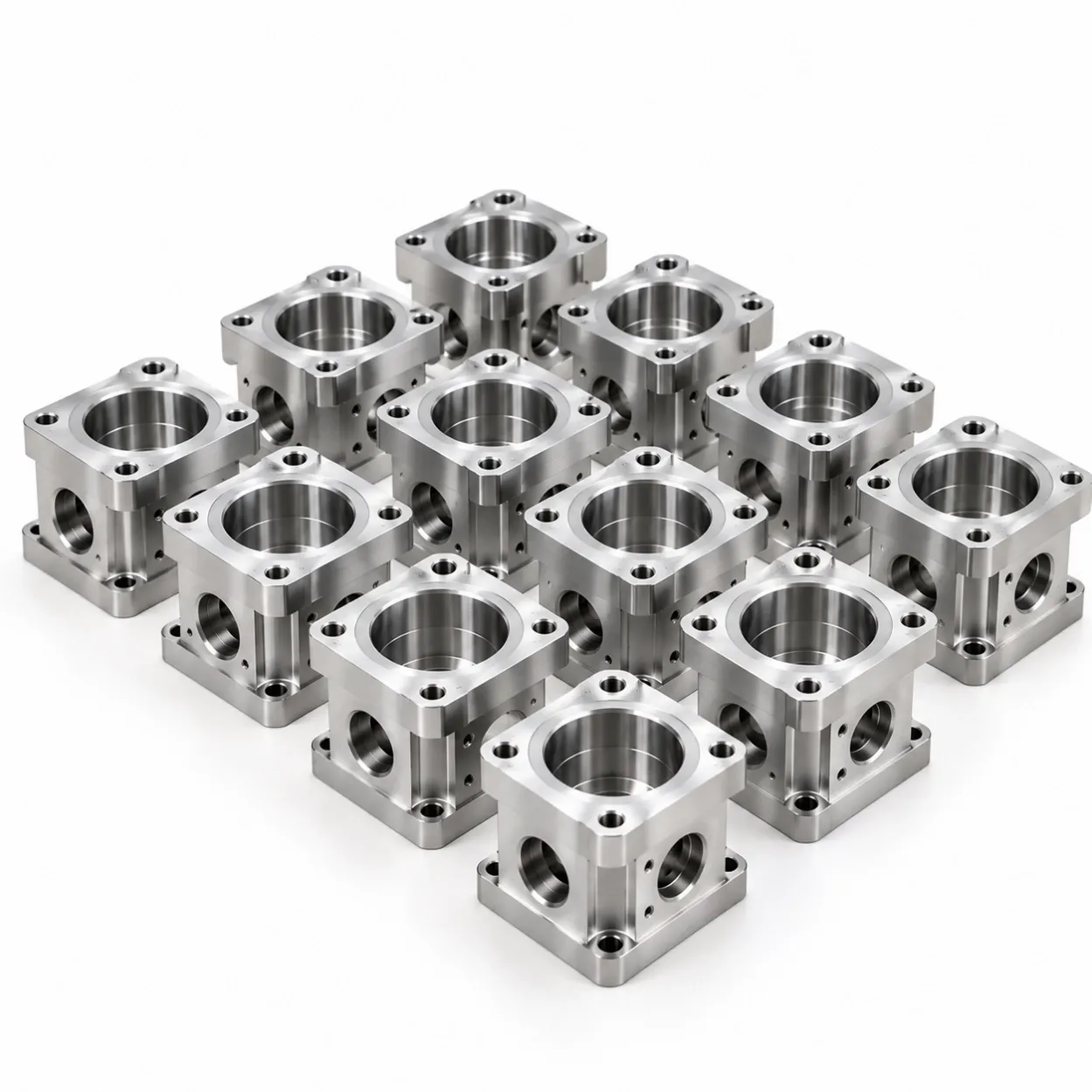
Low-volume CNC machined parts from approved drawings and STEP files for small batches and repeat orders. Submit quantities, revisions and inspection requirements for RFQ review.
Low-volume CNC machining is suitable when a component has progressed beyond initial prototype evaluation and the customer needs a controlled small production batch or repeat manufacturing.
YSBK manufactures low-volume CNC machined parts from customer-approved 2D drawings and matching CAD files. We do not develop product geometry from an initial concept or an undocumented sample change.
For quotation review, submit the released drawing and STEP file, drawing revision, material specification, quantity for each part number, critical tolerances, finishing requirements and required inspection records.
If the design is still being evaluated or frequently revised, see our Prototype CNC Machining for Engineering Parts page.
Low-Volume CNC Production From Released Drawings
Low-volume CNC production normally begins after the customer has evaluated the design and released a manufacturing file set.
Typical requirements include:
- Small production batches for industrial equipment, automation or engineering assemblies
- Repeat orders for an existing machined component
- Several drawing numbers required for the same machine or project
- Replacement quantities that do not require mass-production tooling
- Revised components manufactured after an approved engineering change
- Bridge production while the customer evaluates future demand
Each quotation is reviewed against the current drawing, CAD revision, quantity, material, tolerances, secondary processes and inspection requirements.
Drawing and CAD Buyer Gate
A component name, reference photograph or standalone STEP file may not provide enough information for a controlled low-volume production quotation.
The 3D model defines nominal geometry, but it may not communicate:
- Drawing and CAD revision
- Complete material grade and condition
- General and feature-specific tolerances
- Datum structure and geometric controls
- Thread size, pitch, class and depth
- Surface-finish requirements
- Heat-treatment or hardness requirements
- Coating, plating, marking or masking requirements
- Critical dimensions
- Inspection and documentation requirements
Submit an approved 2D drawing together with the matching STEP file wherever possible.
If the drawing and CAD model conflict, the controlling requirement must be confirmed by the customer before quotation or production.
For more information, see 2D Drawing vs. 3D CAD for CNC Prototype Quotes.
From Prototype to Low-Volume Production
A successful prototype does not automatically become the final production definition.
During prototype testing, engineers may manually enlarge a hole, adjust a slot, remove an interference point or modify an assembly surface. These changes must be incorporated into an updated drawing and CAD model before the next batch is manufactured.
YSBK does not treat undocumented prototype modifications, marked photographs or verbal instructions as permanent production requirements.
A controlled transition typically follows this sequence:
Prototype Evaluation → Approved Design Revision → Manufacturing Review → Small Production Batch → Repeat Order
The customer retains responsibility for approving the design, material selection and suitability of the completed assembly. YSBK reviews machining feasibility against the customer-approved manufacturing files.
Repeat Orders and Revision Control
Repeat manufacturing depends on accurate control of the documentation used for each batch.
Current Drawing and CAD Revision
Each order should identify the current drawing and CAD revision. Previously supplied files should not be assumed to remain valid for a new batch.
Engineering Changes
If geometry, material, tolerances, threads, heat treatment, finishing or inspection requirements change, provide the updated files before quotation or production.
Repeat-Batch Review
A repeat order may still require a new review. Material availability, quantity, subcontract processing, inspection scope and delivery requirements may differ from the previous batch.
The previous purchase order or part number can support identification, but the current approved manufacturing files remain the production reference.
For more information about document-controlled manufacturing, see our Build-to-Print Manufacturing guide.
Multi-Part Engineering Projects
A low-volume CNC project can include several components belonging to the same machine, assembly or equipment build.
An RFQ package may contain housings, mounting plates, brackets, shafts, adapters or other customer-designed mechanical components. Quantities can differ between part numbers.
For every component, clearly identify:
- Part number
- Drawing revision
- CAD revision
- Required quantity
- Complete material specification
- Critical dimensions and tolerances
- Required secondary processes
- Inspection or documentation requirements
Organizing the RFQ by part number reduces the risk of applying the wrong revision, quantity or requirement to a component.
Materials and Secondary Processes
Material must be identified by its complete grade and condition rather than a general description such as “aluminum,” “steel” or “plastic.”
Raw-material availability must be confirmed for every order during the RFQ stage. YSBK will not substitute a material grade, condition or filler specification without the customer’s written approval.
Where the drawing requires heat treatment, surface finishing, coating, plating, polishing, marking or another secondary process, the work may be coordinated through subcontractors where applicable.
Feasibility, cost and lead time are evaluated for each RFQ. Secondary processes are not automatically included when they are absent from the drawing and quotation request.
Machining Tolerances and Critical Features
There is no single machining tolerance that applies to every CNC machined component.
Tolerance feasibility depends on factors including:
- Material and stock condition
- Part size and geometry
- Wall thickness
- Amount of material removed
- Feature depth and accessibility
- Workholding
- Heat treatment or surface finishing
- Inspection condition
- Required batch-to-batch control
Critical fits, sealing surfaces, datum features, threads and assembly interfaces should be clearly identified on the 2D drawing.
Applying unnecessarily tight tolerances to every feature can increase machining and inspection cost without improving assembly function. The drawing should distinguish genuinely critical features from dimensions that can use an appropriate general tolerance.
Inspection and Documentation
Parts are inspected using calipers, micrometers, depth gauges and height gauges for basic dimensional verification.
YSBK does not have in-house CMM or optical inspection equipment. Full-dimensional reports, CMM reports, first-part photographs and key-dimension records are not provided by default and must be agreed during the RFQ stage.
Inspection records cover only the dimensions and requirements agreed in the quotation scope.
If dimensions must be checked in a specific free-state, restrained, fixtured or assembly condition, define that requirement in the drawing or RFQ.
Material certificates and lot-traceability documents are issued by raw-material suppliers. Certificate and traceability requirements must be confirmed per order during RFQ and are not automatically included with shipment.
What to Send for a Low-Volume CNC Machining RFQ
Provide the following information for each part number:
- Approved 2D engineering drawing
- Matching STEP or another suitable 3D CAD file
- Current part number, drawing revision and CAD revision
- Required quantity
- Complete material grade and condition
- Critical dimensions and tolerances
- Datum and inspection condition where applicable
- Thread specifications
- Heat-treatment or hardness requirements
- Surface finish, coating, plating or masking requirements
- Required material certificates or traceability
- First-part photograph or dimensional-record requirements
- Target delivery requirement
- Previous purchase order or project reference for a repeat order
If several components belong to the same assembly, they can be submitted in one RFQ package. Identify the revision and quantity separately for every part number.
Frequently Asked Questions
What is the difference between prototype and low-volume CNC machining?
Prototype CNC machining supports engineering evaluation, fit checks and design revisions. Low-volume CNC machining is suitable for designs released for small-batch or repeat production.
Can I submit several different part numbers in one RFQ?
Yes. Components belonging to the same machine or assembly can be reviewed together. Clearly identify the drawing revision, CAD revision and quantity for each part number.
Can you manufacture repeat orders using files from a previous batch?
The previous order can be used as a reference, but the customer should confirm the current drawing and CAD revision. Files from an earlier order should not automatically be assumed to remain valid.
Can a manually modified prototype be used for the next batch?
Not without updated documentation. Approved prototype modifications should be incorporated into the released drawing and CAD model before manufacturing the next batch.
Are dimensional reports or CMM reports included automatically?
No. Full-dimensional reports, CMM reports, first-part photographs and key-dimension records are not included by default. Required inspection records must be defined and agreed during the RFQ stage.
Do you provide material certificates with every order?
Material certificates and lot-traceability records are issued by raw-material suppliers. They are not included automatically and must be requested and confirmed during RFQ.
Will YSBK substitute a material if the requested grade is unavailable?
YSBK will not substitute a material grade, condition or filler specification without the customer’s written approval. Material availability is reviewed for every order.
Is there a minimum order quantity?
MOQ is one part. A single component still requires sufficient drawing, material and inspection information for manufacturing review.
Can you support a second-source manufacturing project?
Second-source projects can be reviewed when the approved drawings, CAD files and manufacturing requirements are available. See our Second-Source CNC Machining guide.
Request a Low-Volume Manufacturing Review
Send the approved drawings, matching CAD files, quantities, material requirements, critical tolerances, secondary processes and inspection needs.
We will review the submitted manufacturing information and identify items that require clarification before quotation.
Can YSBK Quote Just One CNC-Machined Part?
Cost element | Required for one part? | Cost behavior |
|---|---|---|
Drawing and CAD review | Yes | Initial project work |
CAM programming | Yes | Usually reusable for identical parts |
Workholding and machine setup | Yes | Normally applies per setup or batch |
Raw material | Yes | Increases with quantity |
Machining time | Yes | Increases with quantity |
Dimensional inspection | Yes | Depends on the drawing and inspection scope |
Subcontracted finishing | When specified | May include batch or minimum charges |