Prototype CNC Machining for Engineering Parts
One-off CNC prototype parts made from approved drawings and STEP files. Submit material, quantity, critical tolerances and inspection needs for RFQ review.
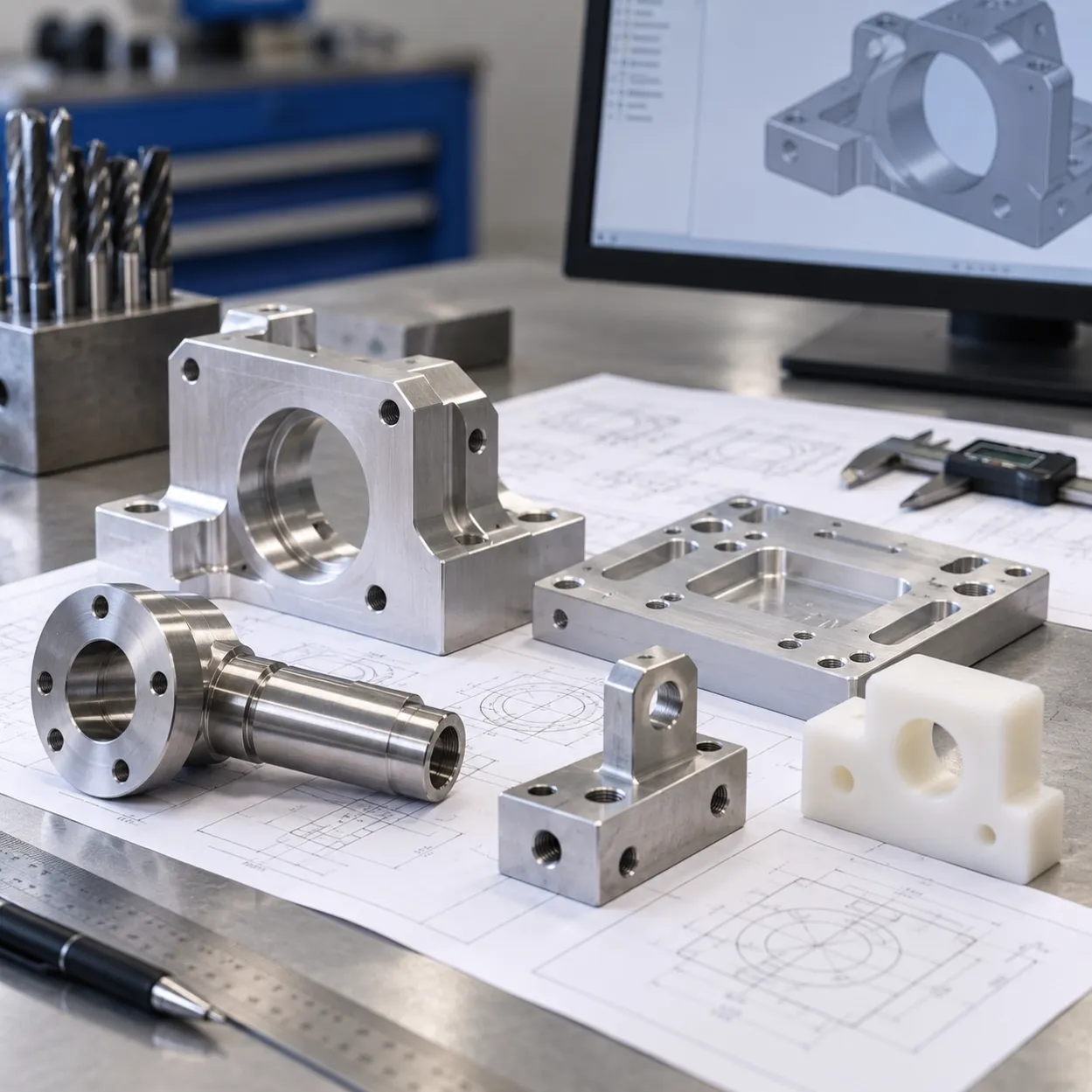
YSBK manufactures one-off and low-volume CNC prototype parts from customer-approved drawings and CAD files for engineering evaluation, assembly checks and functional testing.
For quotation, provide the latest 2D drawing and a matching STEP file where available. The RFQ should identify the material grade, quantity, critical dimensions, tolerances, threads, finishing and inspection requirements.
A part name, photograph, concept sketch or 3D model alone may not communicate all manufacturing and acceptance requirements. Any conflict between the drawing and CAD model must be resolved before manufacturing.
Prototype CNC Parts From Approved Manufacturing Files
Prototype CNC machining is suitable when a design has progressed far enough for physical parts to be evaluated.
YSBK manufactures from customer-controlled files. We do not provide product design services or take over design authority. Material selection, design approval, assembly validation and final application suitability remain the customer’s responsibility.
Prototype projects may support:
- dimensional and assembly checks;
- engineering evaluation;
- functional testing;
- replacement or revised components;
- fixtures and test equipment;
- preparation for a low-volume production batch.
MOQ is one piece. Multi-part projects may also be reviewed when several drawing numbers belong to the same machine, assembly or engineering project.
Typical Prototype Components
Prototype projects may include:
- machined housings;
- mounting and positioning plates;
- CNC-machined brackets;
- shafts, pins, spacers and sleeves;
- tooling and fixture components;
- other customer-designed mechanical components.
Each component is reviewed against its own drawing revision, material, quantity and manufacturing requirements.
Materials for CNC Prototype Machining
Prototype parts may be reviewed in:
- 6061-T6 and 7075-T6/T651 aluminum;
- carbon, alloy and tool steel;
- 304, 304L, 316, 316L and 17-4 PH stainless steel;
- Grade 2 and Grade 5 titanium;
- POM, PTFE and Nylon/PA engineering plastics;
- unfilled, glass-filled and carbon-filled PEEK.
Raw-material availability must be confirmed for every project during RFQ. YSBK will not substitute a material grade or condition without the customer’s written approval.
Any required heat treatment, grinding or surface finishing is reviewed separately. Subcontracted-process feasibility, cost and lead time must be confirmed per order and are not included automatically.
Drawing and CAD Requirements
A matching 2D drawing and STEP model provide different manufacturing information.
The STEP model communicates nominal geometry. The drawing should define requirements that may not be fully communicated by the model, including:
- material grade and condition;
- drawing revision;
- dimensional and geometric tolerances;
- datum references;
- thread specifications;
- surface finish;
- heat treatment or hardness;
- critical features;
- inspection and documentation requirements.
For more guidance, read 2D Drawing vs. 3D CAD for a CNC Prototype Quote.
YSBK does not select between conflicting files without customer confirmation. Production should proceed only after the controlling drawing and CAD revision have been identified.
Inspection and Documentation
Parts are inspected using calipers, micrometers, depth gauges and height gauges for basic dimensional verification.
YSBK does not have in-house CMM or optical inspection equipment. Full-dimensional reports, CMM reports, first-part photographs and key-dimension records are not provided by default.
Any required photographs, recorded dimensions, sample quantity, inspection condition or documentation format must be agreed during RFQ.
Material certificates and lot-traceability documents are issued by raw-material suppliers. These documents must be confirmed per order during RFQ and are not automatically included with shipment.
Inspection verifies the agreed part features against the approved manufacturing files. It does not validate the component inside the customer’s complete machine or assembly.
From Initial Prototype to Revised Parts
A prototype may reveal that the design needs to change after assembly or functional evaluation.
Manual rework or fitting performed on a prototype does not automatically become a requirement for the next order. If the approved geometry changes, the customer should issue an updated drawing and CAD model before another manufacturing run.
Initial Prototype → Engineering Evaluation → Updated Drawing and CAD → Revised Prototype
Each revised version is reviewed against the newly released files. This protects both parties from manufacturing the next batch to an undocumented prototype modification.
When the design has been released for repeat manufacturing, see Low-Volume CNC Machining for Engineering Parts.
For additional guidance on design responsibility and revision control, read Build-to-Print Manufacturing.
What to Send for a Prototype CNC Machining RFQ
Please provide:
- the latest approved 2D drawing;
- the matching STEP or STP file;
- part number and drawing revision;
- complete material grade and condition;
- quantity for each part number;
- critical dimensions and tolerances;
- thread and fit requirements;
- heat treatment or hardness requirements, where applicable;
- surface-finishing requirements;
- inspection and documentation requirements;
- target delivery date.
If several components belong to one project, identify the revision and quantity for every part number.
Frequently Asked Questions
Can you manufacture one CNC prototype part?
Yes. MOQ is one piece. Material availability, geometry, inspection and any subcontracted processes are reviewed during RFQ.
Can I request a quotation from a STEP file only?
A STEP file can support geometry review, but it may not define material, tolerances, threads, surface finish or inspection requirements. Provide a matching 2D drawing or written manufacturing requirements where these details apply.
Can several different components be quoted together?
Yes. Multiple drawing numbers can be reviewed as one engineering project. Identify the current revision and required quantity for each component.
Are dimensional reports included automatically?
No. Full-dimensional reports, first-part photographs and key-dimension records are not included by default. Define the required dimensions, sample quantity and documentation format during RFQ.
Can you manufacture a revised part after prototype testing?
Yes. Submit the updated and approved drawing and CAD files. Undocumented manual changes to the first prototype should not be used as production requirements.
Will you change the material if the requested grade is unavailable?
No material substitution should be made without written customer approval. Material grade, condition and availability are confirmed during RFQ.
Request a Prototype Manufacturing Review
Send the approved drawing, matching CAD model, material grade, quantity, critical tolerances, finishing and inspection requirements.
We will review the submitted manufacturing information and identify any points requiring clarification before quotation.