Second-Source CNC Supplier: RFQ, Drawings & Quote Comparison
Qualifying a second CNC machining supplier? Compare drawings, scope, materials and inspection before the first order. Approved 2D and STEP files required.
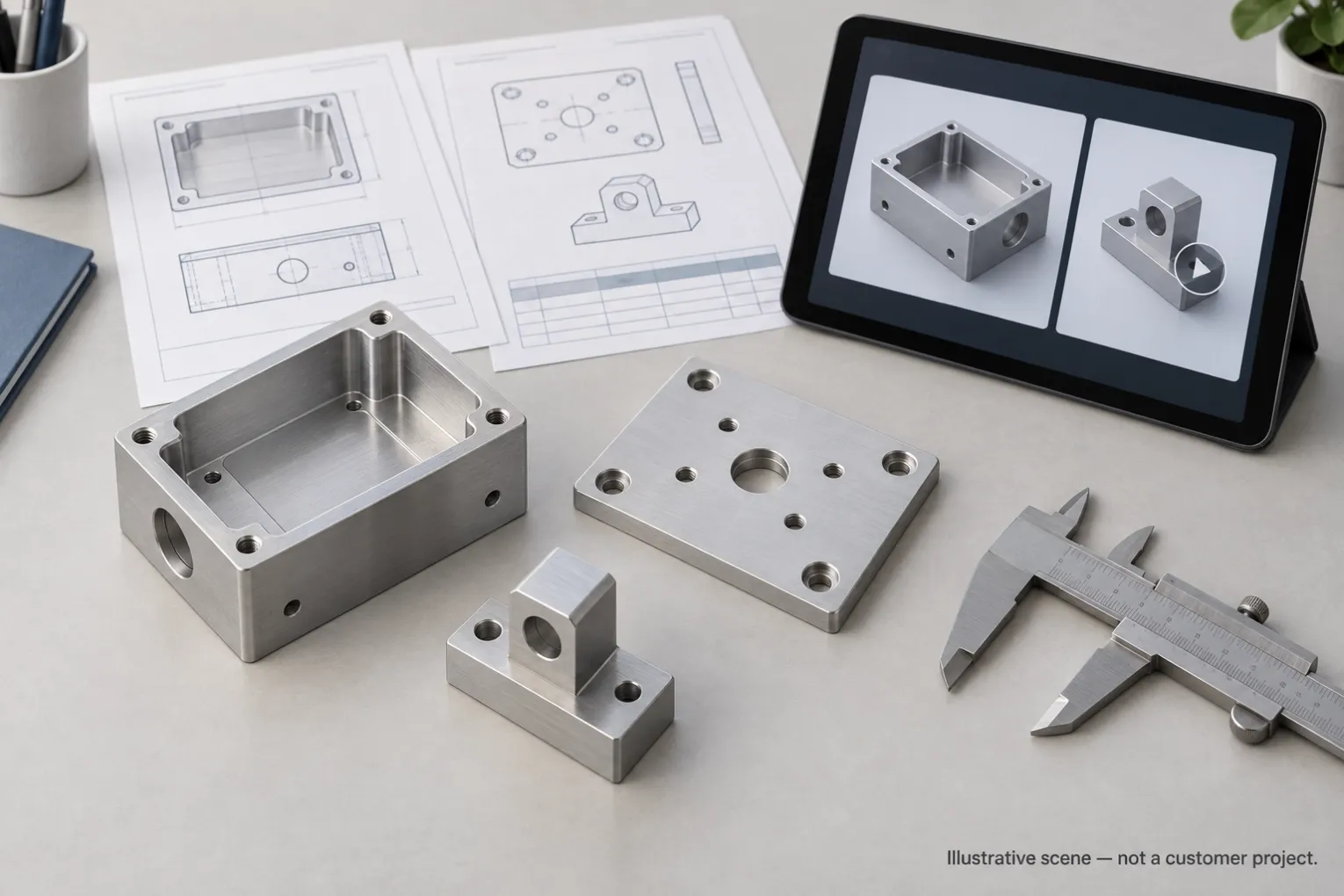
Adding a second CNC machining supplier is not simply a matter of sending an old part number and comparing the lowest price.
For industrial equipment, tooling and repeat-production components, the new supplier must quote from the same approved manufacturing requirements used for the current part. The drawing revision, CAD geometry, material, quantity, finishing condition and inspection scope must all be clear before quotations can be compared.
For RFQ review, provide the latest customer-approved dimensioned 2D drawing and a matching STEP or STP file. Photographs, written descriptions and physical samples cannot replace controlled manufacturing files. YSBK does not provide in-house reverse engineering, scanning, sample measurement or drawing reconstruction.
Submit your second-source CNC part RFQ
What Files Are Required to Qualify a Second CNC Supplier?
A second-source quotation should start from a controlled file package rather than an undocumented copy of a previous order.
Submit:
- the latest approved 2D drawing;
- a matching STEP or STP file;
- the current drawing and CAD revision;
- the complete material grade and condition;
- the quantity required for the first order;
- expected repeat quantities, identified separately from the current order;
- heat-treatment and finishing requirements;
- critical tolerances, datums and mating features;
- inspection and documentation requirements;
- packaging, cleanliness or corrosion-protection requirements;
- the required delivery date and destination.
If the drawing, CAD file, BOM or purchase note contains conflicting requirements, the customer must confirm which controlled document governs production. YSBK will not choose between conflicting revisions without written customer clarification.
For guidance on controlling manufacturing files, review the Build-to-Print Manufacturing Guide.
How Should Two CNC Machining Quotations Be Compared?
A lower total price does not necessarily mean two suppliers have quoted the same manufacturing scope. Compare each quotation against the same requirements.
Part Numbers and Quantities
Confirm which BOM lines are included, the quantity quoted for each part number and whether any components remain under review. Separate the quantity required for the first order from forecasts or possible repeat demand. A forecast provides commercial context, but it should not be treated as the confirmed order quantity.
Material Grade and Condition
Confirm that each quotation uses the complete drawing-defined material grade and condition. Raw-material availability must be confirmed for every order during RFQ. YSBK will not substitute a material grade or condition without the customer’s written approval. An alternative-material quotation should be clearly separated from an offer to manufacture the part exactly as specified.
Heat Treatment and Surface Finishing
Check whether the quotation includes every required secondary process. Where heat treatment, grinding, anodizing, black oxide or another specified finish is required, its feasibility, cost and lead time must be reviewed during RFQ. These processes may be coordinated as subcontract work and are not automatically included unless stated in the quotation scope. The drawing should identify dimensions and surfaces that must be controlled after heat treatment or finishing.
Inspection and Documentation
A quotation should distinguish routine dimensional verification from additional inspection records or reports. Required photographs, videos, dimensional records, certificates and traceability documents must be agreed during RFQ. They should not be assumed from a previous supplier’s process or from an earlier order.
Why Must the Drawing and CAD Revision Match?
A 3D model defines nominal geometry, but it may not communicate every manufacturing requirement. The 2D drawing may contain:
- dimensional tolerances;
- GD&T and datums;
- thread classes;
- surface finish requirements;
- heat-treatment conditions;
- coating or masking instructions;
- critical inspection features;
- material and certificate requirements;
- revision-controlled notes.
The STEP file and drawing should describe the same approved design revision.
If a prototype was manually modified after production, that physical change should not automatically become a repeat-order requirement. Update and approve the drawing or CAD file before asking a second supplier to reproduce the change.
For more detail, see 2D Drawing vs 3D CAD for CNC Prototype Quotes.
Which Dimensions Should Be Identified as Critical?
Do not rely on the new supplier to infer which features control assembly or equipment performance.
Identify dimensions and relationships that affect:
- bearing, shaft or pin fits;
- hole-to-hole location;
- mounting and alignment;
- mating surfaces;
- fixture repeatability;
- sealing features;
- thread engagement;
- part-to-part relationships;
- dimensions required after coating or heat treatment.
Applying the tightest tolerance to every feature can increase machining and inspection costs without improving function. The drawing should distinguish critical requirements from general manufacturing dimensions.
What Inspection Can Be Included in the First Order?
Basic dimensional verification uses calipers, micrometers, depth gauges and height gauges.
YSBK does not have in-house CMM or optical inspection equipment. Full-dimensional reports, CMM reports, first-part photographs, videos and key-dimension records are not included by default. Required records, inspection scope and measurement conditions must be agreed during RFQ.
Material certificates and lot-traceability documents are issued by raw-material suppliers. Hardness reports, where applicable, are issued by the heat-treatment subcontractor.
Certificate, hardness-documentation and traceability requirements must be confirmed per order during RFQ and are not automatically included with shipment.
How Should the First Second-Source Order Be Planned?
The first order should provide enough information to evaluate whether the approved manufacturing requirements can be repeated reliably.
Before ordering, confirm:
- the released drawing and CAD revision;
- the exact part numbers and quantities;
- the quoted material and condition;
- all included heat-treatment and finishing processes;
- the critical dimensions and inspection scope;
- any required photographs, records or certificates;
- dispatch or arrival expectations;
- packaging and corrosion-protection requirements;
- the process for resolving technical questions before production.
MOQ is one part. However, the most useful first-order quantity depends on the material, setup, subcontract processes, inspection scope and the number of components needed for the customer’s receiving or assembly evaluation.
For suitable prototype and repeat-batch projects, see Low-Volume CNC Machining.
How Should Delivery Timing Be Confirmed?
Tell the supplier when the components are required at your facility. Clarify whether the quotation refers to:
- quotation response timing;
- manufacturing lead time;
- dispatch date;
- estimated transit time;
- requested arrival date.
These are different milestones. Misalignment on lead-time definitions is a common source of expectation gaps when onboarding a second supplier. Confirm the quoted milestone and buffer time before finalizing your order plan.
Frequently Asked Questions
Can YSBK quote second-source parts from a physical sample only?
No. We require customer-approved 2D dimensioned drawings plus matching STEP files. We do not offer scanning, reverse engineering or drawing reconstruction from physical parts.
Can I order a single part for second-source qualification?
Yes, MOQ = 1. Setup, subcontract and inspection costs will still be evaluated per RFQ.
Should I share the existing supplier’s quote with YSBK for matching?
We can manufacture to your released drawing requirements, but we cannot match scope that is not defined on your drawing. Price comparison is only valid when both suppliers quote against identical drawing, material, finishing and inspection requirements.
Are secondary processes like heat treatment included automatically in the quote?
No. Heat treatment, grinding, plating and surface finishes are subcontracted and must be explicitly defined in your RFQ for inclusion in quotation scope.
Start Your Second-Source CNC Supplier Review
Share your released 2D drawing, matching STEP file, material specs, critical dimensions, finishing and inspection requirements for second-source quotation review. We will review the submitted file package and identify missing manufacturing information before quotation.