Sep 24, 2026CNC Machining Guides
304 vs 316 vs 17-4 PH for CNC Machined Parts | YSBK
Compare 304, 316 and 17-4 PH for CNC machined parts, including corrosion, strength, heat treatment, finishing and the drawing details needed for an accurate RFQ.
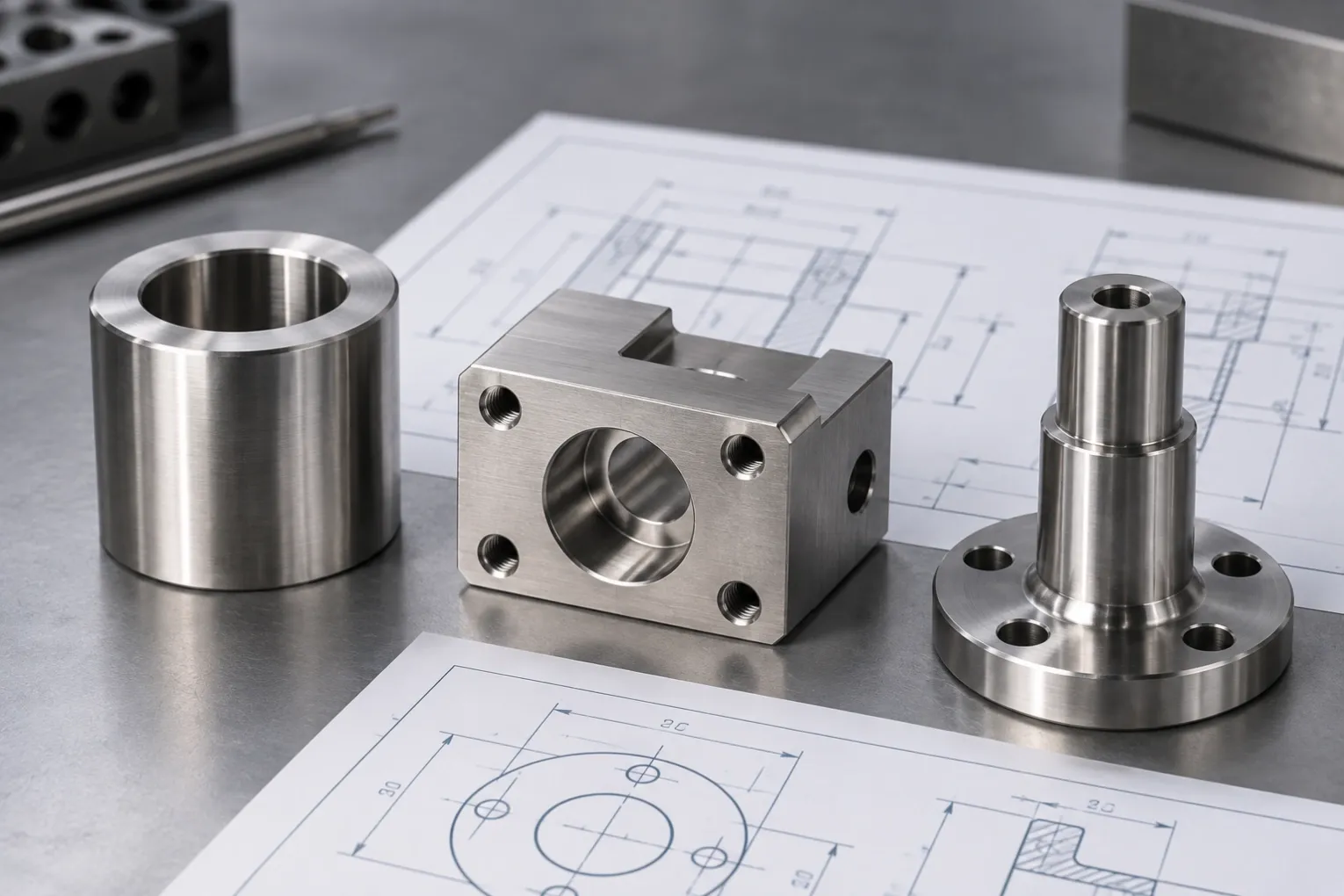
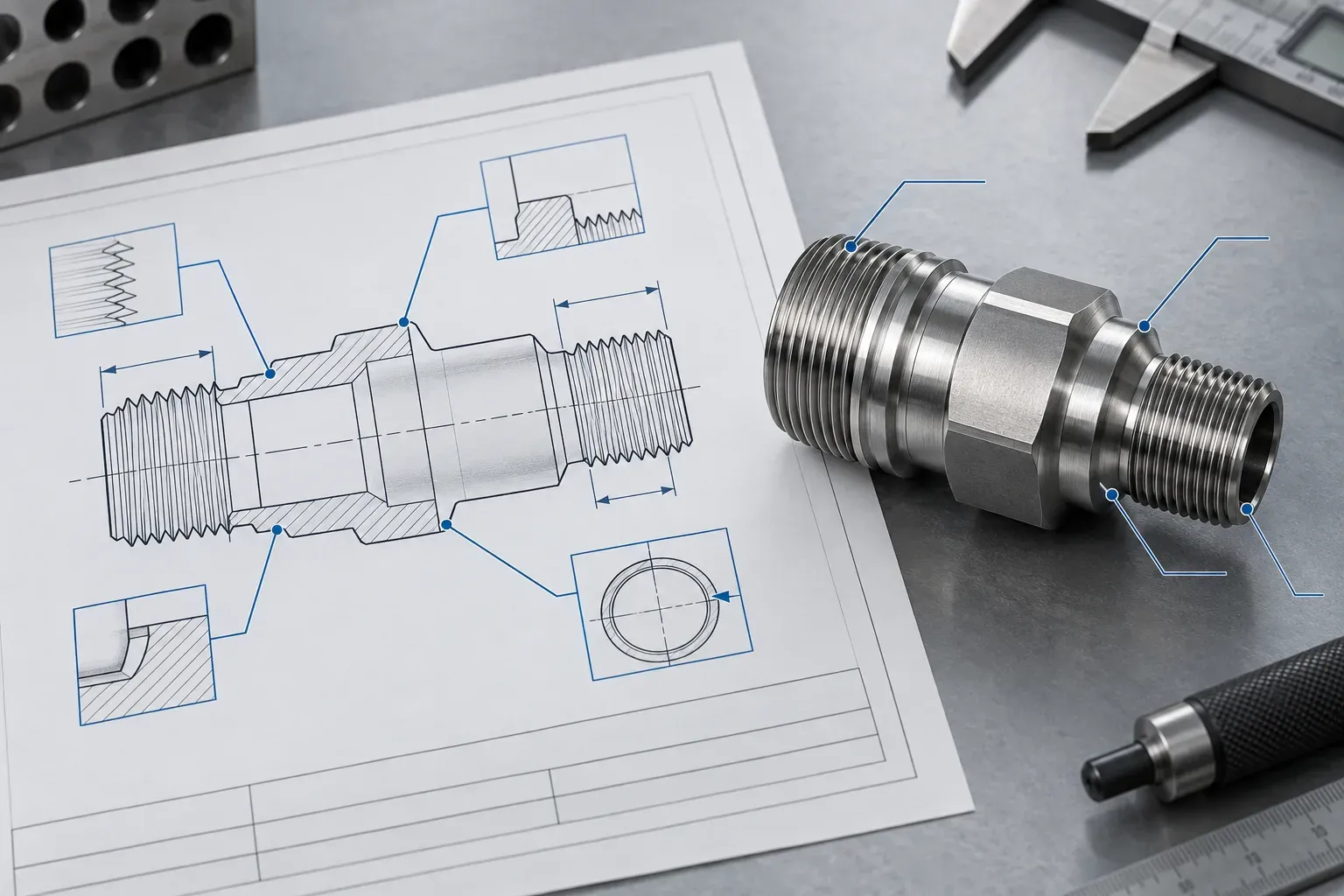
Material grade is only one part of the RFQ definition. The drawing should also state the material condition, heat treatment, surface finish and required inspection evidence.
When an RFQ compares 304, 316 and 17-4 PH stainless steel for a CNC-machined part, the grade name is only the beginning. The supplier still needs to know the exact specification, material condition, secondary operations and which dimensions matter after heat treatment or finishing. “Stainless steel” is too broad for purchasing. Even “17-4 PH” is incomplete if the drawing does not state the approved final condition.
YSBK machines 304, 304L, 316, 316L and 17-4 PH stainless steel to customer-approved drawings. Its DFM & Quotation Engineer can identify missing manufacturing inputs, but YSBK does not choose or certify the material for the customer’s complete assembly or operating system. Before requesting a quotation, the drawing owner should lock the grade, condition and required records so that every supplier prices the same delivered part.
Material Choice Starts With the Failure You Need to Prevent
The useful question is not “Which stainless steel is best?” It is what the part must withstand and which property controls the design.
- Will the part operate indoors under ordinary industrial conditions, or will it encounter chlorides, washdown chemicals or another defined corrosive medium?
- Is localized corrosion the main concern, or does the design depend on higher strength and hardness?
- Will welding, heat treatment or surface finishing take place after machining?
- Which fits, sealing surfaces or datum relationships must remain within tolerance after those operations?
304 and 304L are widely specified for general industrial components when their corrosion performance and mechanical properties satisfy the approved design.
316 and 316L contain molybdenum and are commonly considered when the design requires improved resistance to pitting and crevice corrosion in chloride-bearing environments. Calling a material “marine grade” does not complete the specification. Temperature, concentration, deposits, crevice geometry, cleaning chemicals and surface condition can all change the corrosion risk.
17-4 PH serves a different purpose. It is a precipitation-hardening stainless steel used when the approved design requires a defined strength-and-hardness route. Published material-supplier data describe its corrosion resistance as closer to 304 than to 316, so it should not be treated as an automatic replacement for 316 in a corrosion-critical application.
The responsible engineer must verify the selection against the governing standard and real operating conditions. The Outokumpu Prodec range datasheet provides one published comparison of 304L, 316L and 17-4 PH. It is a material reference, not approval for a customer application.
Keep 304, 304L, 316 and 316L Distinct in the RFQ
If the released drawing specifies 304L or 316L, repeat that exact grade in the RFQ and purchase notes. Do not shorten it to 304 or 316 because the names appear similar. Any proposed substitution must return to the buyer’s responsible engineer for approval.
The controlled drawing, STEP file, RFQ and purchase order should agree on:
Drawing or RFQ field | Required definition |
|---|---|
Material | Exact grade and governing specification |
Product form | Bar, plate or another controlled stock form when relevant |
Starting condition | Required as-supplied condition, if controlled |
Final condition | Approved post-machining condition for 17-4 PH or another heat-treated part |
Critical features | Fits, threads, bores, datum relationships and functional surfaces |
Secondary operations | Heat treatment, passivation or another specified finish |
Final acceptance | Dimensions and records that apply after treatment or finishing |
If the design team has not approved the grade or condition, mark it as an open item. The quotation can then identify the missing decision instead of embedding an assumption in the price.
A 17-4 PH Callout Needs the Final Condition
“17-4 PH” alone does not define the finished mechanical condition. The customer’s approved drawing must state the requirement.
YSBK does not preselect or publish a standard menu of aging conditions. Subcontractor availability, lead time, cost and minimum-order requirements vary by project. 17-4 PH age hardening can be arranged through external subcontractors; the final heat-treatment condition is confirmed per order.
The quotation review therefore needs to establish:
- whether machining occurs before or after the specified treatment;
- which features remain critical after treatment;
- whether post-treatment machining or finishing is required;
- what hardness evidence the buyer expects;
- whether the order quantity is compatible with the subcontract process.
If a hardness report is required, request it during the RFQ stage. The report is provided by the external heat-treatment subcontractor, not by an in-house YSBK heat-treatment department.
Include Surface Finish in the Initial Quotation
Surface finishing can affect masking, handling, dimensional acceptance, subcontract cost and delivery planning. It should not be added after the machining scope has already been priced.
YSBK can coordinate these processes through qualified external subcontractors:
- passivation;
- mechanical polishing;
- brushed finish;
- sandblasting;
- electropolishing;
- laser marking or laser engraving.
Scope and lead time are confirmed during RFQ. The drawing should identify the treated surfaces, excluded areas, buyer-approved specification and acceptance requirement.
If a controlled dimension applies after finishing, state that explicitly. For an appearance-only finish, identify the visible surfaces instead of using an undefined note such as “good finish.”
Grade Alone Does Not Determine the Machining Cost
Material affects the quotation, but geometry and acceptance requirements often drive more of the manufacturing work.
Thin walls, long unsupported sections, deep pockets, small or deep threaded holes, precision bores, tight hole-position tolerances and dimensions controlled after heat treatment or finishing may change workholding, tool access, setup count and inspection effort.
The design team does not need to prescribe cutting speeds or tooling. It should identify the features that control fit, alignment, sealing or motion. Non-functional dimensions can follow an appropriate general tolerance, while critical features receive the tighter control they actually need.
Outokumpu’s stainless-steel machining guidance notes that stainless grades need suitable tooling and process planning and that machining behavior varies by grade.
For quotation purposes, the supplier still needs the actual geometry, tolerances and delivered condition—not a general statement that stainless steel is difficult to machine.
Specify Certificates Before Suppliers Price the Job
Material certificates are issued by raw-material suppliers. Hardness reports are provided by external heat-treatment subcontractors. All certificate requirements must be confirmed per order at the RFQ stage and are not included by default.
This matters when procurement compares quotations. A price that includes material traceability or an external hardness report is not directly comparable with a price for the machined component alone.
Name each required document and connect it to the relevant part, material batch or subcontract operation. Avoid requesting “all certificates” when the quality or purchasing team needs only a specific record.
Pre-RFQ Check for a Stainless-Steel Machined Part
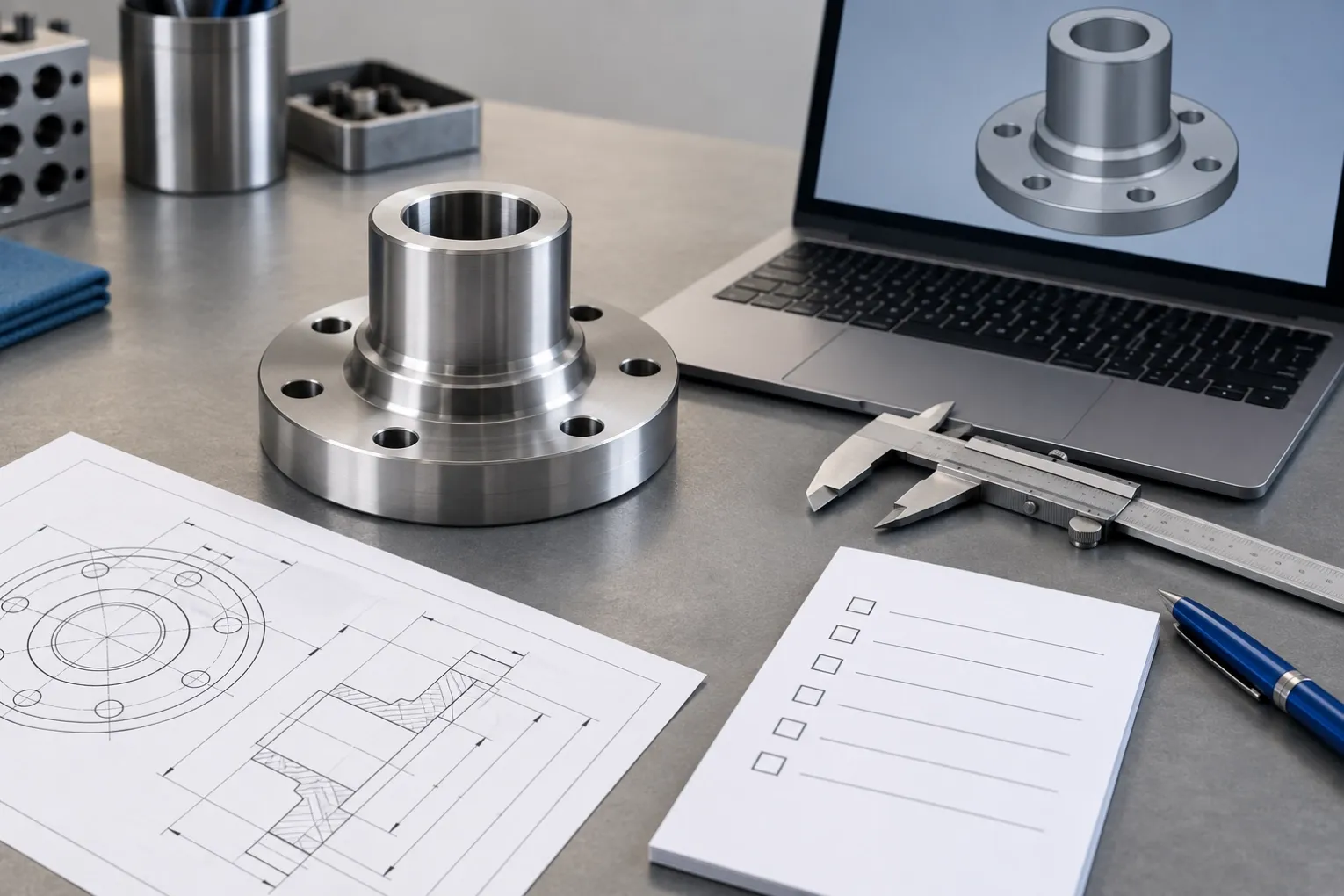
Before releasing the package, check that the following information agrees across the drawing, CAD model and purchasing notes:
- exact material grade: 304, 304L, 316, 316L or 17-4 PH;
- governing material specification, where required;
- approved final condition for 17-4 PH, without asking the supplier to select it;
- prototype or low-volume production quantity;
- critical dimensions and the production stage at which they apply;
- subcontracted finish and the surfaces it covers;
- material certificate, hardness report or selected-dimension record required with the order;
- matching drawing and STEP revisions.
If one of these decisions remains open, identify the responsible engineering owner before comparing quotations. Otherwise, different suppliers may price different assumptions while appearing to quote the same part.
What YSBK Reviews—and What Remains With the Buyer
YSBK’s DFM & Quotation Engineer reviews drawing and STEP packages for file completeness, initial manufacturability and missing quotation inputs.
The review may identify an incomplete material callout, an undefined 17-4 PH condition, conflicting revisions, unclear post-treatment tolerances or a certificate requirement that needs confirmation.
YSBK manufactures from customer-approved drawings and CAD files. It does not design, validate or certify the customer’s complete corrosion, pressure, safety or load-bearing system.
Within an agreed inspection scope, YSBK performs basic dimensional and visual checks using calipers, micrometers, depth gauges and height gauges. A handwritten or Excel selected-dimension record may cover critical dimensions identified on the customer drawing when agreed before the order. This is not a full-dimensional inspection report.
YSBK does not have in-house CMM inspection, high-precision optical metrology or high-precision 3D scanning. It does not provide formal AS9102 full-dimensional FAI reports.
Send a Grade-Defined Drawing Package for Review
This service is for parts already defined by customer-approved drawings or CAD files. If the material is approved and the geometry is ready for manufacturing review, see Custom Stainless Steel Parts.
- exact material grade and applicable specification;
- quantity;
- critical tolerances;
- required heat treatment or surface finish;
- material certificate, hardness report or inspection record required with the order.
The first review checks whether the package is complete enough for manufacturing evaluation. It does not approve the material for the buyer’s application and does not commit either party to production.
For the wider quotation package, read Low-Volume Machined Steel Parts: What to Specify Before Requesting a Quote. Before sending proprietary drawings or CAD files, review the Technical File Handling Policy.