Aug 29, 2026CNC Machining Guides
Low-Volume Machined Steel Parts: What to Specify Before Requesting a Quote
Learn what to specify when requesting low-volume machined steel parts, including material grade, heat treatment, tolerances, quantity, finish and inspection requirements.
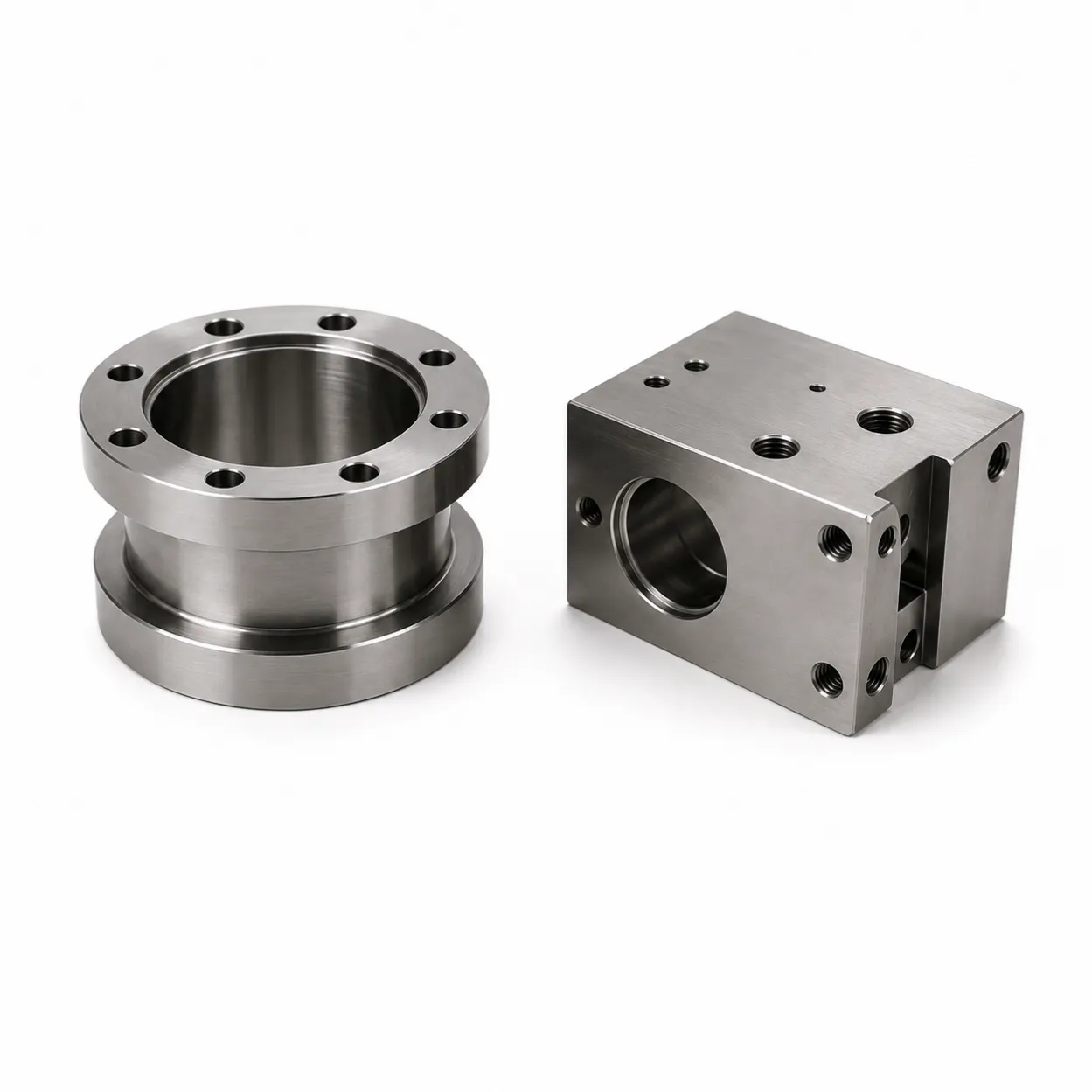
Low-Volume Machined Steel Parts: What to Specify Before Requesting a Quote
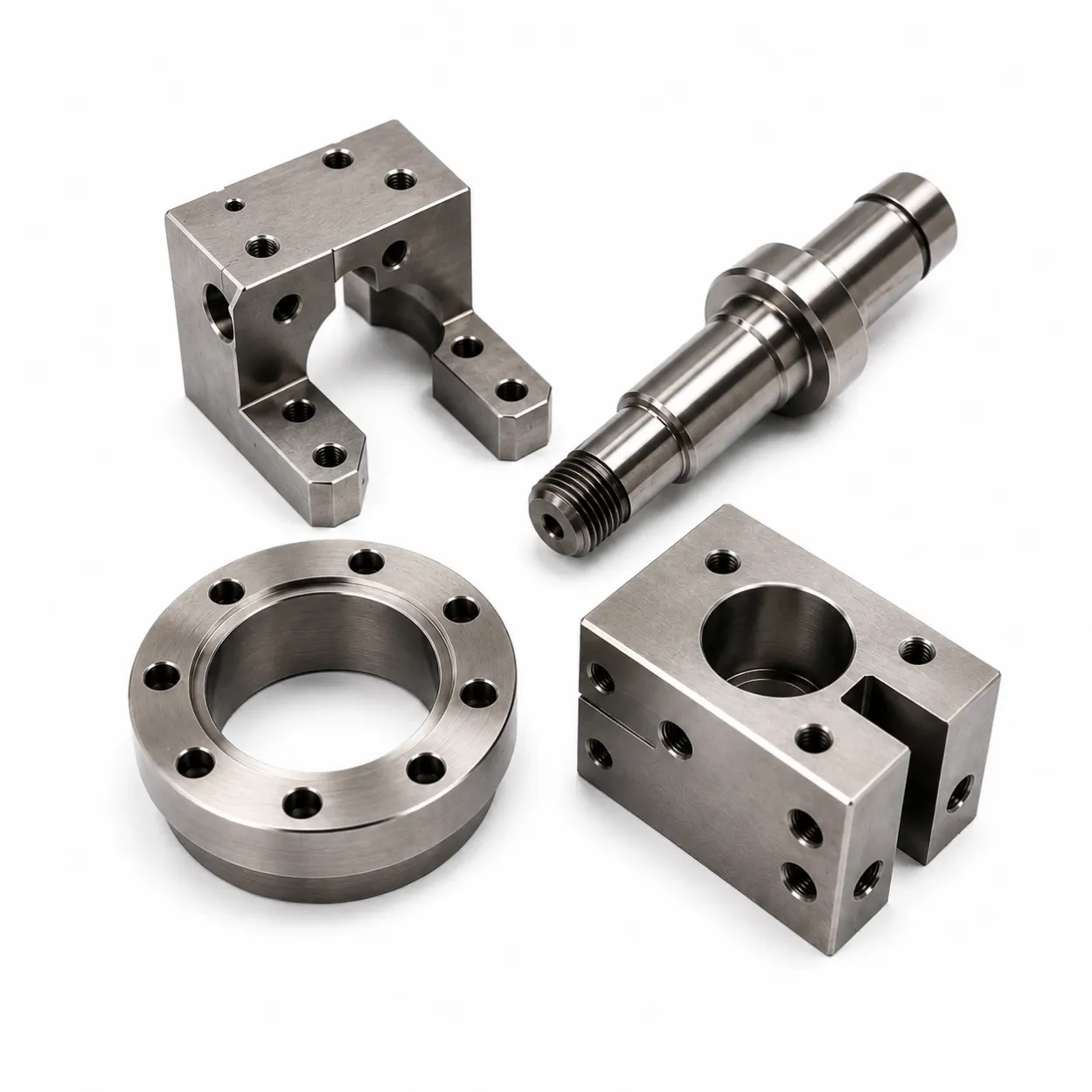
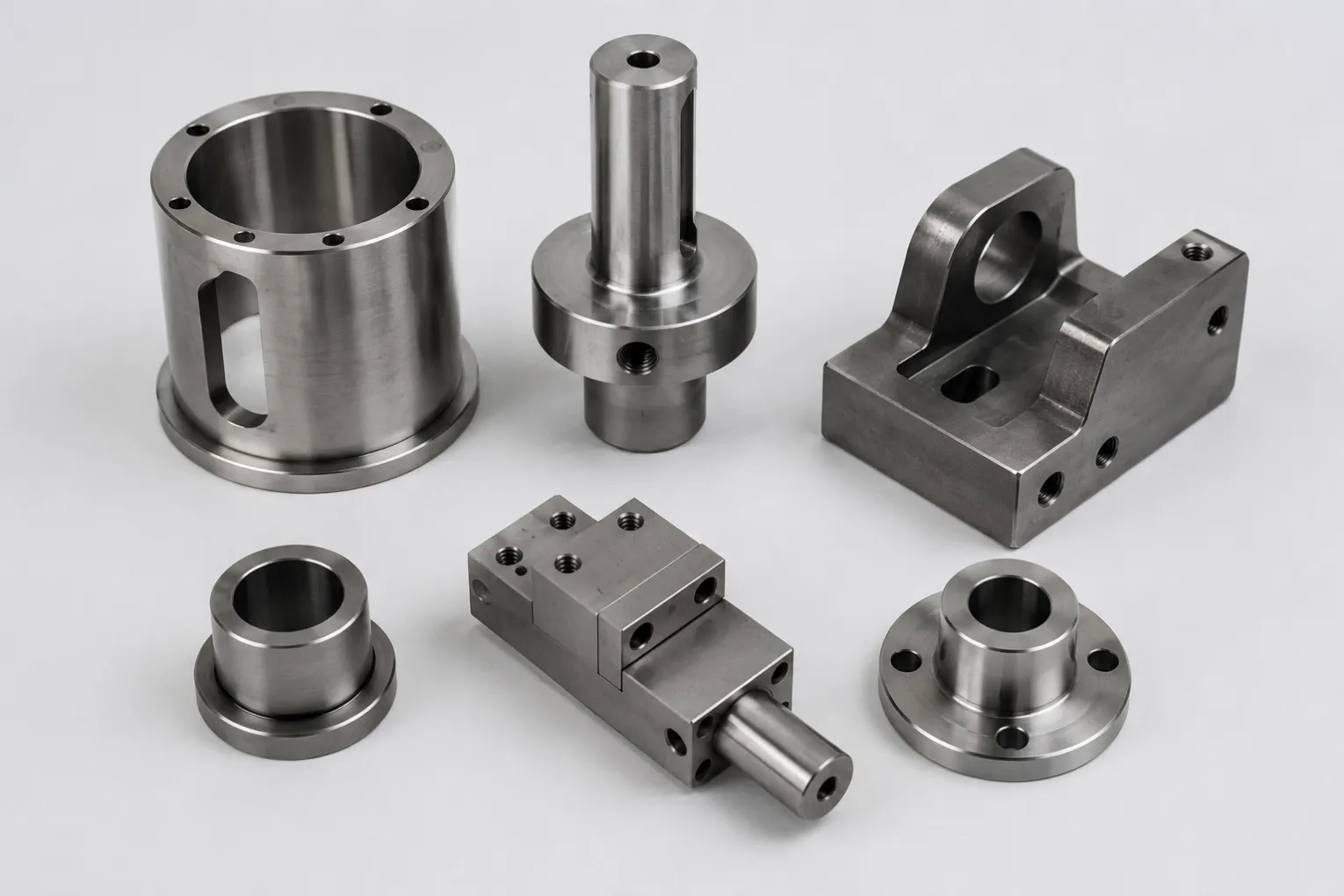
Low-volume machined steel parts are often required for industrial equipment, tooling, fixtures, replacement components, and engineering projects where only a small number of parts are needed.
For quantities such as 1, 5, 20, or 50 pieces, CNC machining can be a practical option because it allows parts to be produced directly from engineering drawings without dedicated production tooling.
However, low quantity does not necessarily mean a simple quotation.
Steel grade, material condition, heat treatment, critical tolerances, surface requirements, and inspection expectations can all affect machining strategy, cost, and lead time.
Providing these details clearly in an RFQ helps the manufacturer evaluate the project more accurately before production begins.
When Does Low-Volume Machining Make Sense for Steel Parts?
Low-volume CNC machining is commonly used when a project requires:
- Prototype or engineering validation parts
- Small batches for industrial equipment
- Tooling and fixture components
- Replacement or spare machine parts
- Components for equipment modifications or repairs
- Parts that may require design changes before repeat production
For these projects, ordering large production quantities may not be practical.
A first order may contain only a few pieces, followed by repeat batches after fit, function, or equipment performance has been verified.
This makes manufacturability and RFQ clarity particularly important.
1. Specify the Exact Steel Grade
Avoid specifying only “steel” on the drawing or RFQ.
Different steel grades can have very different machining characteristics, mechanical properties, heat-treatment requirements, and material costs.
Depending on the application, an engineering drawing may specify materials such as:
- 4140 alloy steel
- 4140 pre-hardened steel
- A2 tool steel
- Carbon steel
- Stainless steel
- Other specified engineering steels
The material condition is also important.
For example, machining 4140 in an annealed condition is different from machining 4140 supplied pre-hardened.
If a specific material specification or equivalent grade is required, include it in the RFQ rather than leaving the supplier to assume.
2. Define Heat Treatment and Hardness Requirements
Heat treatment should be considered before the machining process is finalized.
If the finished component requires a specific hardness, indicate:
- Required hardness range
- Whether material should be supplied pre-hardened
- Whether heat treatment is required after machining
- Which dimensions are critical after heat treatment
- Whether grinding or additional finishing is required afterward
This is particularly important for tooling, fixture components, shafts, wear components, and other parts where hardness affects service life.
Heat treatment can also influence dimensional stability.
For tight-tolerance components, the manufacturing sequence may need to account for possible distortion before final dimensions are achieved.
3. Identify Critical Tolerances
Applying tight tolerances to every dimension can unnecessarily increase machining and inspection costs.
Instead, identify the dimensions that directly affect:
- Assembly
- Bearing or shaft fits
- Alignment
- Location accuracy
- Sliding or rotating interfaces
- Tooling or fixture positioning
- Functional performance
For example, a precision bore used for locating another component may require significantly tighter control than a non-critical external surface.
A clear engineering drawing should distinguish critical features from general dimensions.
This allows the manufacturer to select an appropriate machining and inspection strategy without adding unnecessary operations.
4. State the Quantity and Expected Repeat Orders
Quantity affects how a low-volume machining project is planned.
Instead of simply asking for a “small batch,” provide the actual quantities you are considering.
For example:
Prototype: 2 pcs
Initial batch: 10 pcs
Possible repeat order: 20–50 pcs
This information helps the manufacturer evaluate setup, tooling, machining strategy, and potential repeatability.
For parts expected to be reordered, it may also be useful to discuss how critical dimensions and inspection requirements will be maintained between batches.
5. Define Surface Finish and Post-Machining Requirements
Post-machining requirements should be included during quotation rather than added after machining has already been planned.
Depending on the component, these may include:
- Deburring
- Grinding
- Black oxide
- Plating
- Heat treatment
- Specific surface roughness
- Protection of critical surfaces
- Other specified finishing processes
If certain surfaces must remain free from coating or require special protection, indicate them clearly on the drawing.
Surface requirements can affect dimensional allowances, masking, handling, and final inspection.
6. Specify Inspection Requirements
Not every dimension requires the same level of inspection.
For low-volume precision steel parts, identify the features that are most important to the function of the component.
These may include:
- Precision bores
- Hole positions
- Flatness
- Parallelism
- Perpendicularity
- Critical overall dimensions
- Fits between mating components
If an inspection report or specific measurement requirement is needed, include this information when requesting the quotation.
This helps avoid discovering additional quality-documentation requirements after the parts have already been manufactured.
What Should Be Included in a Steel Parts RFQ?
A useful RFQ package should normally include as much of the following information as possible:
2D engineering drawing — dimensions, tolerances, threads and critical features.
3D CAD model — useful for understanding geometry and machining features.
Steel grade — including the required specification or acceptable equivalent if applicable.
Material condition or hardness — particularly important for alloy and tool steels.
Quantity — including prototype quantity and possible repeat batches.
Critical tolerances — identify the dimensions that affect fit and function.
Heat treatment and surface treatment — specify required post-machining processes.
Inspection requirements — identify critical features and required documentation.
Delivery requirements — indicate any project or equipment schedule that may affect lead time.
Providing this information at the RFQ stage allows potential manufacturing issues to be reviewed before machining begins.
Need Low-Volume Custom Machined Steel Parts?
If you already have a 2D drawing or 3D model for a low-volume steel component, send it together with the material grade, quantity, critical tolerances, and any heat-treatment or finishing requirements.
YSBK Parts supports custom machined steel components for industrial equipment, tooling, fixtures, replacement parts, prototypes, and low-volume production.