Aug 29, 2026CNC Machining Guides
4140 PHT Machining: Hardness, Tolerances and RFQ Considerations
Learn what to specify when sourcing 4140 PHT machined parts, including material condition, hardness, critical tolerances, heat treatment and inspection requirements.
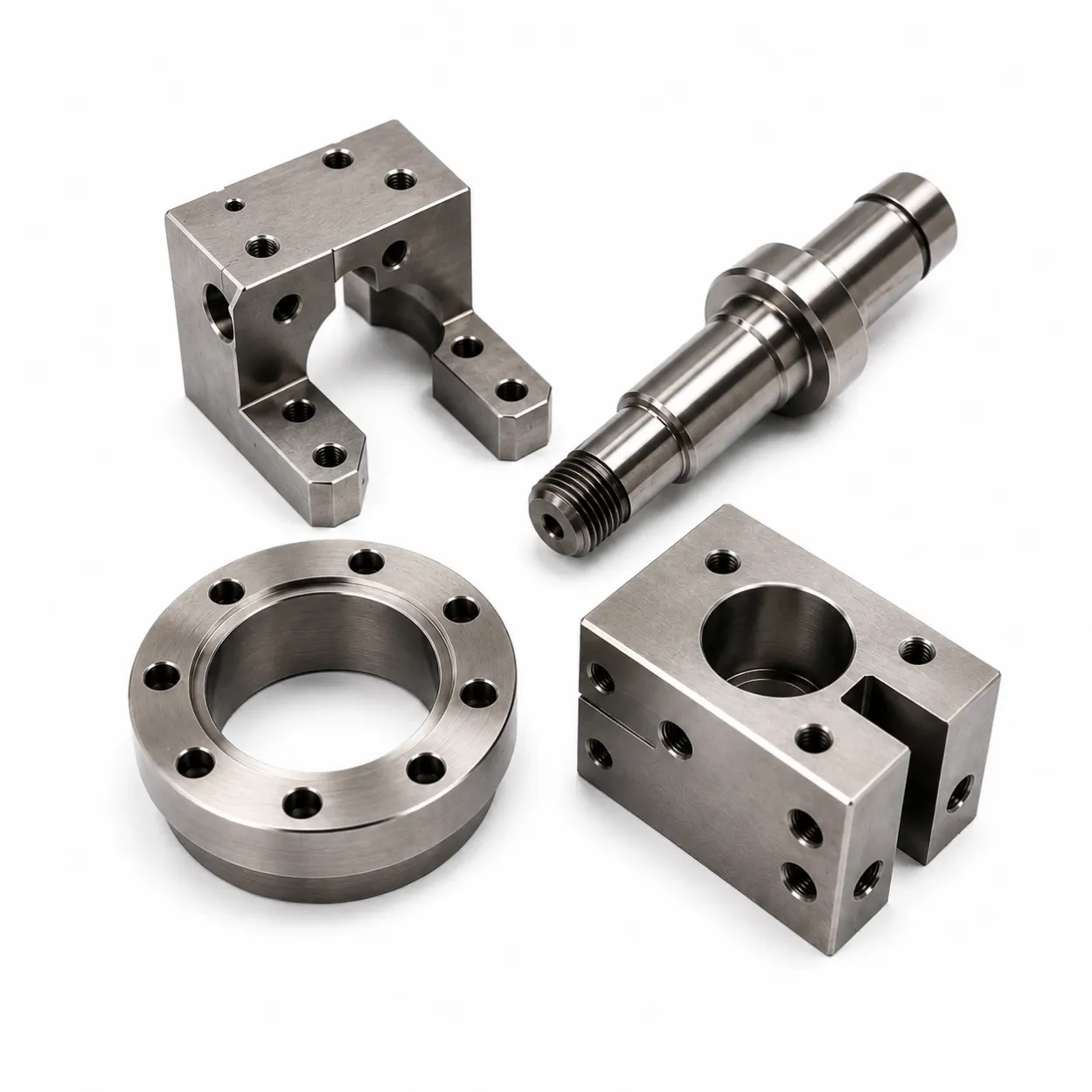
4140 PHT is commonly specified for shafts, tooling components, machine parts, fixture components and other industrial parts that require higher strength and wear resistance.
For a custom machined part, however, calling out “4140” on the drawing is not always enough.
The supplied material condition, required hardness, critical tolerances and any post-machining heat treatment can affect the manufacturing route. These details become especially important when the part combines complex geometry, precision fits or multiple critical features in prototype or low-volume quantities.
For engineers preparing an RFQ, the goal is not to define every machining parameter. It is to give the supplier enough information to evaluate the features that matter to the function of the part.
Material Condition Matters Before Machining Starts
4140 may be supplied in different conditions. When PHT or pre-hardened material is required, the drawing or RFQ should identify that condition rather than specifying only the alloy grade.
This matters because material hardness influences machining strategy, tool wear and process stability. More importantly for the customer, it can affect how critical dimensions are approached and whether additional finishing operations should be considered.
If hardness is functionally important, specify the required range instead of assuming all 4140 PHT stock will meet the same condition.
For quotation, it is useful to provide:
- Material grade or applicable specification
- PHT / pre-hardened condition
- Required hardness range, if controlled
- Material certification requirements
- Any additional heat treatment after machining
These details help the supplier review the part against the actual engineering requirement rather than making assumptions during quotation.
Tight Tolerances Should Follow Part Function
With low-volume industrial parts, the most important question is usually not:
“How tight can 4140 PHT be machined?”
A better question is:
“Which features need tight control for this part to function correctly?”
A typical 4140 component may include bearing bores, shaft fits, locating holes, dowel features, mating surfaces or GD&T-controlled relationships. These features often deserve more attention than non-critical dimensions on the same drawing.
For example, a machine component may have a precision bore that controls bearing fit while the surrounding external profile only requires a general machining tolerance. Applying the same tight tolerance everywhere can add machining and inspection cost without improving the function of the part.
Tolerance feasibility also depends on geometry. A short rigid component with an accessible precision bore is different from a long shaft, deep pocket or thin-wall section made from the same material.
When preparing an RFQ, identify the dimensions and geometric relationships that directly affect:
- Assembly
- Bearing or shaft fit
- Location
- Alignment
- Motion
- Sealing
- Load transfer
This gives the machining supplier a clearer basis for reviewing manufacturing and inspection requirements.
Review Heat Treatment Before Finalizing Critical Dimensions
If the required mechanical properties can be achieved with material already supplied in the appropriate pre-hardened condition, machining from PHT stock may eliminate the need for a separate hardening operation after major machining.
That can be useful when dimensional stability is important.
If additional heat treatment is required after machining, however, dimensional change should be considered before the process is finalized. Critical bores, fits or geometric relationships may require machining allowance for a later finishing operation.
Depending on the component, this may involve finish machining or grinding selected features after heat treatment.
The correct sequence depends on the actual drawing.
For a simple component with generous tolerances, this may have little impact. For a complex industrial part containing several related precision features, the machining and heat-treatment sequence can become part of the manufacturing risk.
This is one reason it is useful to identify heat treatment and final hardness requirements during RFQ review rather than after machining has already started.
Complex Geometry Often Drives the Real Machining Difficulty
Hardness alone does not determine whether a 4140 PHT part is difficult to manufacture.
Geometry can be equally important.
Deep pockets, long-reach features, intersecting holes, thin sections, multiple precision bores and critical features machined from different setups can all influence machining strategy and dimensional control.
This is particularly relevant to parts used in:
- Industrial machinery
- Automation equipment
- Tooling and fixtures
- Engineering test equipment
- Custom machine development
- Equipment repair and modification
These projects often involve relatively small quantities, but that does not make the parts simple.
A batch of five complex machine components with several controlled fits can require more engineering review than hundreds of straightforward production parts.
For this type of project, the supplier should be able to look beyond the material callout and identify which features are likely to drive setup, machining, inspection and finishing decisions.
What to Include in a 4140 PHT RFQ
A clear RFQ allows manufacturing questions to be addressed before production begins.
For custom 4140 PHT parts, include the following whenever available:
2D drawing and 3D model
Use the drawing to define tolerances, GD&T, threads, finishes and other requirements that should not be inferred from the model.
Material specification and condition
Identify 4140 PHT or the applicable specification and required material condition.
Hardness requirement
State the required hardness range and whether verification or certification is needed.
Critical dimensions
Clearly identify precision fits, bearing locations, locating features, mating surfaces and geometric controls.
Quantity
Include prototype quantity, initial batch quantity and expected repeat demand if known.
Heat treatment and finishing
Specify any additional heat treatment, grinding, coating, black oxide or other required processes.
Inspection requirements
Identify critical dimensions requiring inspection records or project-specific documentation.
Where possible, also tell the supplier what the component does.
You do not need to disclose confidential machine or product details. Even a short description such as fixture locator, drive shaft, bearing support, machine replacement part or structural tooling component can help the supplier understand which features are most likely to be function-critical.
When 4140 PHT Is Part of a Low-Volume Industrial Project
Many custom 4140 PHT requirements are not high-volume production jobs.
An engineering team may need:
- A prototype component for a new machine
- A small batch of tooling or fixture parts
- Replacement components for existing equipment
- Modified parts during equipment development
- Low-volume components with recurring demand
In these projects, quantity may be low while manufacturing complexity remains high.
The challenge is often the combination of material condition + complex geometry + critical tolerances + inspection requirements, rather than any one factor by itself.
This is the type of project where an early drawing review can be valuable.
Instead of quoting only from material, size and quantity, the drawing can be reviewed for critical features, manufacturing sequence and requirements that may affect machining or inspection.
Sourcing Custom 4140 PHT Machined Parts
YSBK Parts supports custom machined steel components for engineering development, industrial equipment and low-volume production.
Our focus is not limited to making a part to its outside dimensions. For complex steel components, we review the drawing together with the material condition, critical features, quantity, finishing and inspection requirements before production.
If your 4140 PHT component includes precision bores, fits, locating features, multiple machining operations or other function-critical dimensions, see our Custom CNC Machined Steel Parts for Industrial Equipment capabilities.
Request a Quote for Your 4140 PHT Parts
If you already have a 4140 PHT part under development, send us your 2D drawing or 3D model, together with the material condition, hardness requirement, quantity and critical tolerances.
We can review the drawing before quotation and identify machining, finishing or inspection requirements that may affect the project.