CNC Machining Guides
How to Read a Mill Test Certificate: CNC Parts Buyer Checklist
Check material grade, condition, test results and heat-to-part traceability before accepting CNC parts. Includes a two-heat order example and a material-certificate RFQ template.
A mill test certificate can describe the right alloy and still leave one purchasing question unanswered: was this the material used for your parts? Read the document against your drawing and purchase order, then check how its heat or batch identity reaches the finished shipment.
For a first order, agree on three things before material is purchased: the required material and condition, the certificate available for it, and the records connecting that certificate to your order. “Material certificate included” is too vague when your customer needs specific evidence.
What an MTC proves—and what needs separate evidence
A mill test certificate (MTC), also called a mill test report (MTR), records material identity and reported test results for the product and inspection unit it identifies. Depending on the applicable specification, it may report chemistry, mechanical properties, delivery condition and other tests. It is not automatically a report on every finished machined component.
A raw-material MTC does not by itself establish finished dimensions, assembly fit, coating thickness or properties after subsequent heat treatment. A supplier's certificate of conformity also serves a different purpose; inspect its actual scope rather than treating document names as interchangeable. Use the quality-document RFQ guide if you need to specify the wider delivery pack.
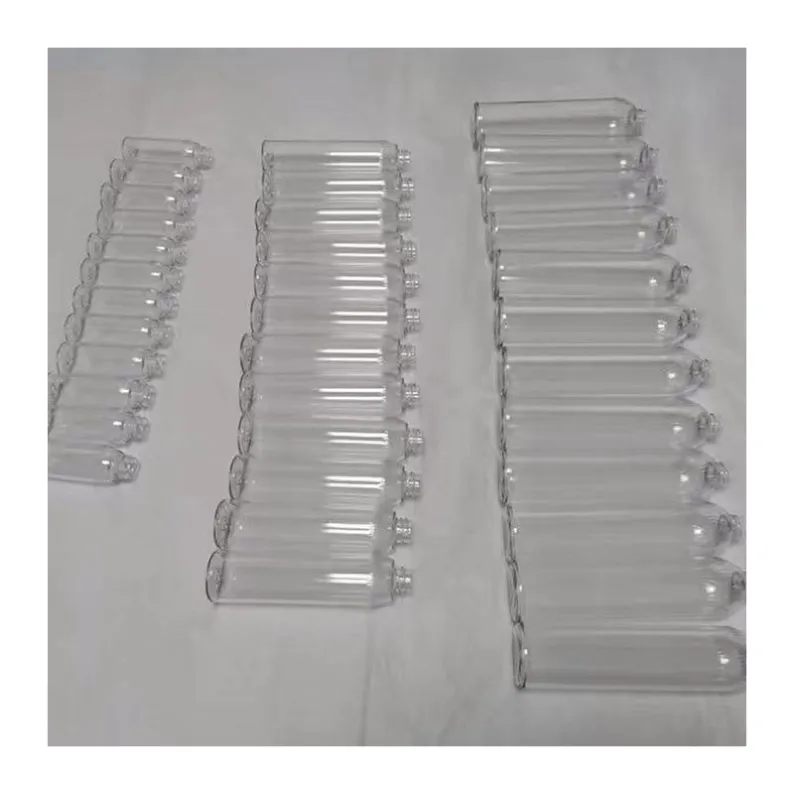
The cover photograph shows transparent tubular components. It is an illustrative product image, not a material certificate, metal-grade identification or test record.
Read the certificate in this purchasing order
Check | Compare with your order | Question if the information does not match |
|---|---|---|
Issuer and document identity | Producer, certificate reference, date and complete pages | Who issued it, and can the source confirm this copy? |
Material specification | Grade, applicable product standard and required edition | Is this the specified material, or a proposed alternative requiring approval? |
Product and condition | Bar, plate or other form; dimensions; temper or heat-treatment condition | Does this certificate describe the stock being purchased for this job? |
Heat, cast or batch identity | Certificate identifiers and incoming-stock records | How will each shipped lot link back to the identified material? |
Reported test results | Required elements, properties, units and applicable acceptance limits | Is a required result missing, out of limit or reported on a different basis? |
Validation and attachments | Required certificate type, validation and referenced reports | Does the supplied document meet the agreed requirement in full? |
Start with identity before studying the numbers. A convincing chemistry table from an unrelated heat does not settle your order. Equally, an old issue date alone does not prove a certificate is invalid: it may describe stock held by a distributor. Check the material identity and supply chain.
Chemistry: check the complete requirement
Do not verify stainless steel by looking only at chromium and nickel, or aluminum only by a familiar grade label. Compare the required composition against the applicable material specification, including relevant limits and units. A commercial material datasheet containing typical values is not evidence of the actual supplied heat.
A proposed grade substitution needs your approval before machining. Similar chemistry does not establish equivalent product form, heat treatment or application performance. If your drawing says only “stainless steel,” have the material requirement resolved before asking a supplier to certify compliance with it.
Mechanical results: check the test basis
Strength, elongation and hardness results need context: product size, delivery condition, test method and the inspection unit defined by the specification. Specimen orientation or test temperature may also matter. Results are not necessarily measurements on every bar or every finished part.
For example, a certificate for annealed steel does not establish the hardness of a component subsequently hardened. Request the relevant processing and verification evidence separately. A value above a minimum is not automatically a problem; assess all applicable limits and the engineering requirement rather than treating “higher” as either better or suspicious.
EN 10204 3.1 or 3.2: name the requirement before ordering
If your customer requires an EN 10204 inspection document, state the type explicitly. Type 3.1 includes results of specific inspection and is validated by the manufacturer's authorized inspection representative independent of the manufacturing department. It does not inherently mean an outside laboratory tested your finished parts. See Penflex's inspection-document summary.
Type 3.2 adds the purchaser's authorized inspection representative or an inspector designated under the applicable regulations to the validation arrangement. Agree on the necessary inspection and witnessing route before procurement; RINA describes material identification, document review and testing activities within its certification service. A later independent test is not automatically a conversion of any existing document into 3.2 certification.
The required document depends on the order and application. Neither type should be assumed to be included in a standard machining quotation. For YSBK inquiries, request confirmation of available material-supplier documentation, traceability scope, cost and timing before placing the order.
A two-heat order: the gap buyers can miss
Illustrative purchasing scenario—not a YSBK customer project or test result: you order 20 stainless-steel flanged sleeves to an approved drawing. The agreed material requirement is 304 stainless-steel bar to the specified product standard. The supplier proposes using stock from two heats: 12 sleeves from Heat A and 8 from Heat B.
Receiving one certificate for Heat A is insufficient for the proposed two-heat supply. Ask for the relevant documentation for both and an agreed link from incoming stock through production to the two finished lots. Packaging labels, job records and a shipment lot schedule may form that link; individual part marking is needed only when the order requires it and the method is approved.
Before production, agree whether mixed heats are acceptable. If individual pieces can become separated in your warehouse, decide how identification will survive repacking. Two PDFs attached to an email do not by themselves tell your receiving team which sleeve belongs to which heat.
The practical acceptance decision is therefore twofold: do the documents meet the material requirement, and is their connection to the supplied lots adequately demonstrated? If the link is missing, hold the affected material or shipment for clarification under the agreed process. Do not invent a missing identifier or accept an unrelated certificate as a replacement.
Different buyers need different assurances
First-time buyer: send the approved drawing, quantity and your end customer's document requirement. If you do not know which certificate is needed, explain the application and ask your responsible engineer or customer to define acceptance. Ask the supplier what documentation is actually available before committing to a material purchase.
Experienced procurement team or wholesaler: compare quotations on the same document scope. Ask whether the price includes the required certificate, lot identification, document review before dispatch and any separately agreed testing. Compare the total accepted supply, not a cheaper unit price with unconfirmed evidence.
Trader or distributor: preserve the producer's document reference and the chain between purchased stock and resold lots. Discuss confidentiality and permitted redaction without removing information your customer needs for traceability. Do not change test values, represent a generic datasheet as a lot report or imply that your own cover sheet replaces the required producer evidence.
Online seller or shop owner: a material claim in a listing must relate to the products you actually supply. Keep a usable batch record when stock is replenished or repacked. A photograph, surface color or certificate from a previous unrelated order cannot substantiate a new batch's grade.
When independent testing helps
Independent testing is useful when it answers a defined question: grade identification, a required chemical analysis, hardness after processing or another agreed property. Select a suitable method, sampling plan, acceptance criteria and competent provider. One test does not establish every material property or the conformity of all parts.
If document authenticity is uncertain, seek confirmation from the issuer through independently checked contact details. If traceability is lost, testing may provide additional evidence but does not recreate the missing supply-chain records. Read the third-party inspection planning guide for booking scope and timing.
Copy this material-document request into your RFQ
“Please quote to drawing [part number/revision], quantity [ ]. Material: [grade, product standard/edition, condition]. Required document: [specified type and issuer]. Please confirm availability before material procurement, the heat/batch traceability provided through to shipped lots, whether mixed heats are permitted, and how identification will be maintained. State included documents, exclusions, additional cost and timing. Submit the agreed document pack for review before dispatch. No material substitution without written approval.”
A helpful supplier answers these points individually, flags unavailable evidence early and identifies what needs customer approval. That gives a buyer something concrete to compare and reduces avoidable holds at receiving. It is more useful than a general promise of “certified quality.”
For parts made to approved drawings, explore low-volume CNC machining. To discuss a specific purchase, send your drawing and material-document requirements. Include quantity, required delivery date and the customer's acceptance clause so document availability can be checked alongside manufacturing feasibility.
Buyer questions
Is a supplier certificate of conformity enough?
Only if it satisfies your agreed requirement. It is not automatically a substitute for an MTC containing the required material results and traceability.
Does every machined part need its heat number engraved?
No universal rule applies to all machined parts. Define the required level of identification, permitted marking locations and packaging controls in the order. Marking must not damage a critical surface.
Can I request the certificate after delivery?
You can ask, but availability and a defensible link to the delivered lot may no longer be recoverable. Resolve the requirement before material is purchased and specify when documents are reviewed.
Does an MTC certify the finished part's country of origin?
Do not assume so. Producer location, material origin and finished-product origin are different questions. Request the specific evidence required for your transaction.
Will a certificate guarantee trouble-free service?
No. Material evidence is one part of acceptance. Design suitability, manufacturing, subsequent processing, inspection and operating conditions also matter. Agree on the required evidence for each relevant risk.