Manufacturing Process Guides
Soft and Flexible Parts by Vacuum Casting: Shore Hardness and Design
Soft and flexible parts by vacuum casting — Shore hardness explained in plain terms, design rules for flex, gaskets that recover, overmolds, and the honest limits of soft urethanes.
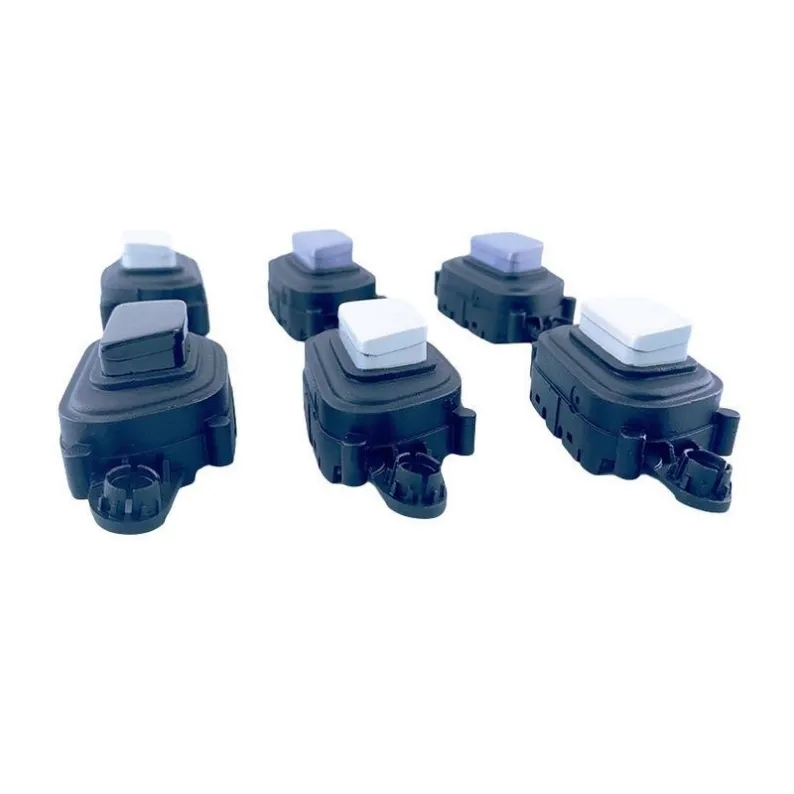
Not every cast part is rigid. Gaskets, dampers, protective boots, snap-fit covers that must flex and return — vacuum casting pours these too, in soft urethane rubbers, and the parts behave like production elastomers. But soft parts fail differently from rigid ones: too soft and the feature slumps, too hard and the snap cracks, and the language for "how soft" — Shore hardness — is a spec most first-time buyers have never written. This guide covers soft and flexible parts by vacuum casting: choosing the hardness, designing for the flex, and writing the callout.
Shore hardness: the language for "how soft"
Elastomer hardness is measured on the Shore scale — Shore A for rubbers, where a low number squishes with a fingernail and a high number resists it. Cast urethanes commonly span the range from soft, jelly-like grades around Shore A 20–40, through the medium band near 50–70 where most gaskets and boots live, up to semi-rigid grades in the 80s that bend but no longer squash. The buyer's job is not to pick the number from a table — it is to describe the flex the part must have (squishes under finger pressure, springs back from a snap, barely yields under clamp) and let the supplier map that to a grade with a data sheet. Confirm the grade in writing at quotation, as the design guidelines require for every resin choice.
Design for the flex: three rules for soft parts
Soft parts change the design rules. Walls can be thinner than rigid parts because the material forgives, but ribs behave differently — a rib in soft material adds little stiffness and much cure mass. Undercuts are far more forgiving: the mold flexes and the part flexes, so snaps and hooks that would trap a rigid part release cleanly — within reason, and deeper snaps belong in the RFQ conversation. And assembly forces change: a snap designed for rigid plastic may need a longer travel in soft material to give the same retention. Prototype the flex with the first casting, not the twentieth.
Gaskets and seals: compression, not just shape
A cast gasket's job is to compress and recover, cycle after cycle. The specification that works: the hardness band, the compression the seal needs (a percentage of thickness, stated), and the environment — temperature, moisture, chemicals it must survive. The supplier maps those to a urethane grade; the buyer verifies recovery on the first article by compressing and releasing it ten times. A gasket that takes a set — stays squashed — fails its real spec even if every dimension is perfect.
Overmolds and rigid-soft combinations
Solid and soft in one part — a rigid body with a soft grip, a hard shell with a soft seal lip — is possible in casting, as two pours or as a cast soft layer over a machined or printed rigid core. The design questions are the interface ones: what locks the soft to the hard (mechanical undercuts, through-holes for the soft to flow through), and which dimensions belong to which material. State the intent in the RFQ; the mold design follows from it.
What soft parts cannot do
The honest limits: soft urethanes are not high-temperature materials — heat ages them faster than rigid plastics. Sharp edges in soft material do not stay sharp. And color in soft grades is limited compared to rigid tints. None of these kill the application; all of them belong in the RFQ so the material choice is made with eyes open — the vacuum casting service pages list the grades available.
Write the spec, cast the part
Send your drawing and describe the flex — squishes like this, springs back like that, survives this environment — and the Shore grade comes back confirmed with a data sheet, the mold designed for the soft part's rules, and the first article to prove the flex before the batch.