Aug 27, 2026
Vacuum Casting Tolerances: How Accurate Are Vacuum Cast Parts?
How accurate is vacuum casting? Learn what affects vacuum casting tolerances, including master patterns, silicone molds, mold life, part geometry and finishing.
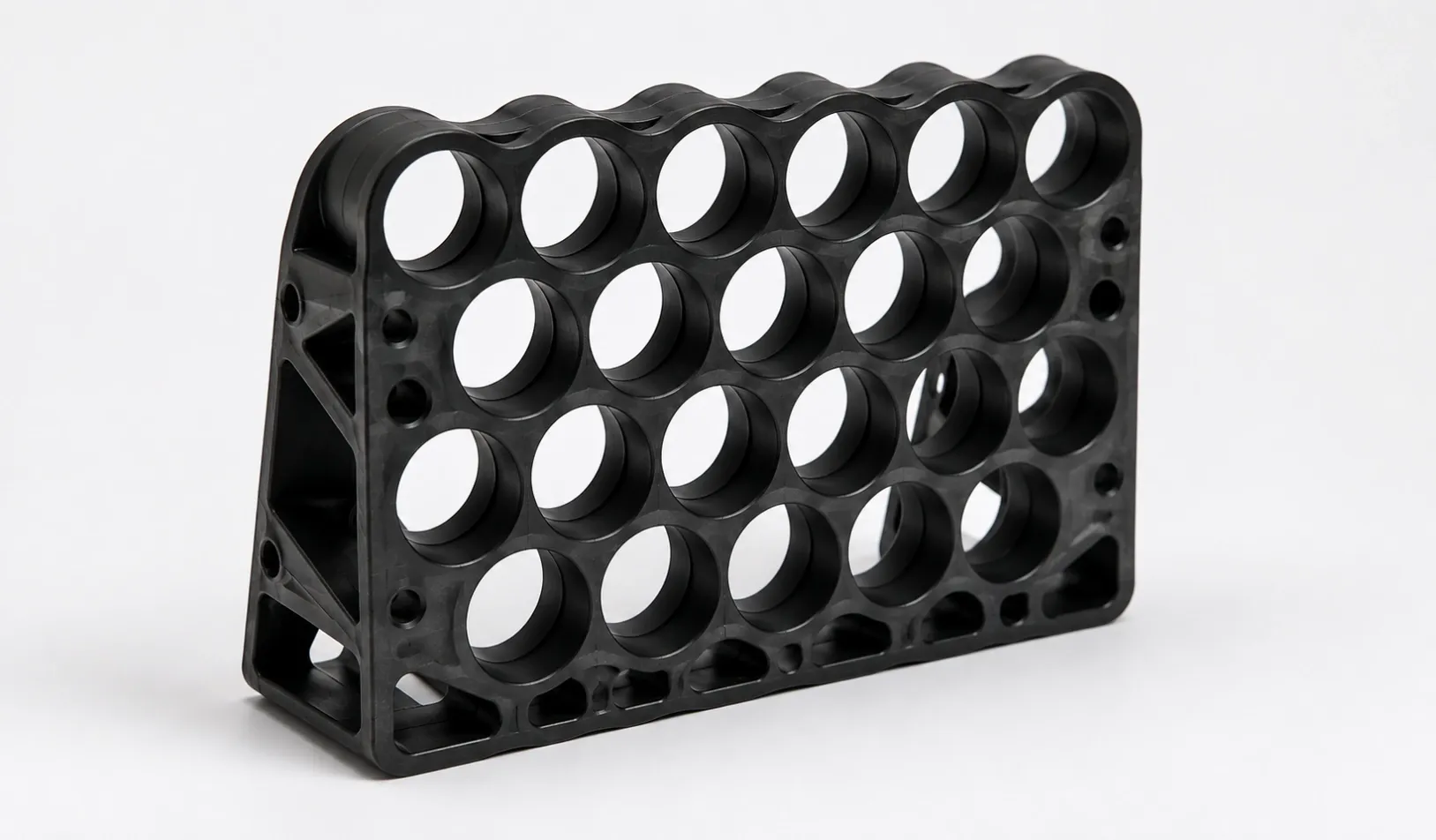
Vacuum casting is widely used for prototypes and low-volume plastic parts, especially when injection molding is too expensive or the design is still changing.
But when a part includes mating features, holes, thin walls or complex internal geometry, one question becomes much more important:
How accurate can vacuum casting actually be?
The answer depends on more than the casting material itself.
The accuracy of a vacuum-cast part is influenced by the master pattern, silicone mold, material behavior, part geometry, mold condition and even manual operations such as mold cutting and finishing.
Understanding these factors before production can prevent assembly problems and unnecessary rework.
What Determines Vacuum Casting Accuracy?
Unlike CNC machining, where the final geometry is produced directly by machining the material, vacuum casting involves several manufacturing stages.
A typical process is:
Master Pattern → Silicone Mold → Vacuum Casting → Demolding → Trimming & Finishing
Each stage can influence the final dimensions.
This is why simply asking for a single “vacuum casting tolerance” does not always give enough information to determine whether the process is suitable for a particular component.
For parts with critical assembly requirements, those dimensions should be reviewed separately before production.
1. The Master Pattern Is the Starting Point
The silicone mold reproduces the master pattern, so the quality and dimensional accuracy of the master directly affect the cast parts.
Two common methods are used to manufacture master patterns:
CNC Machined Master Patterns
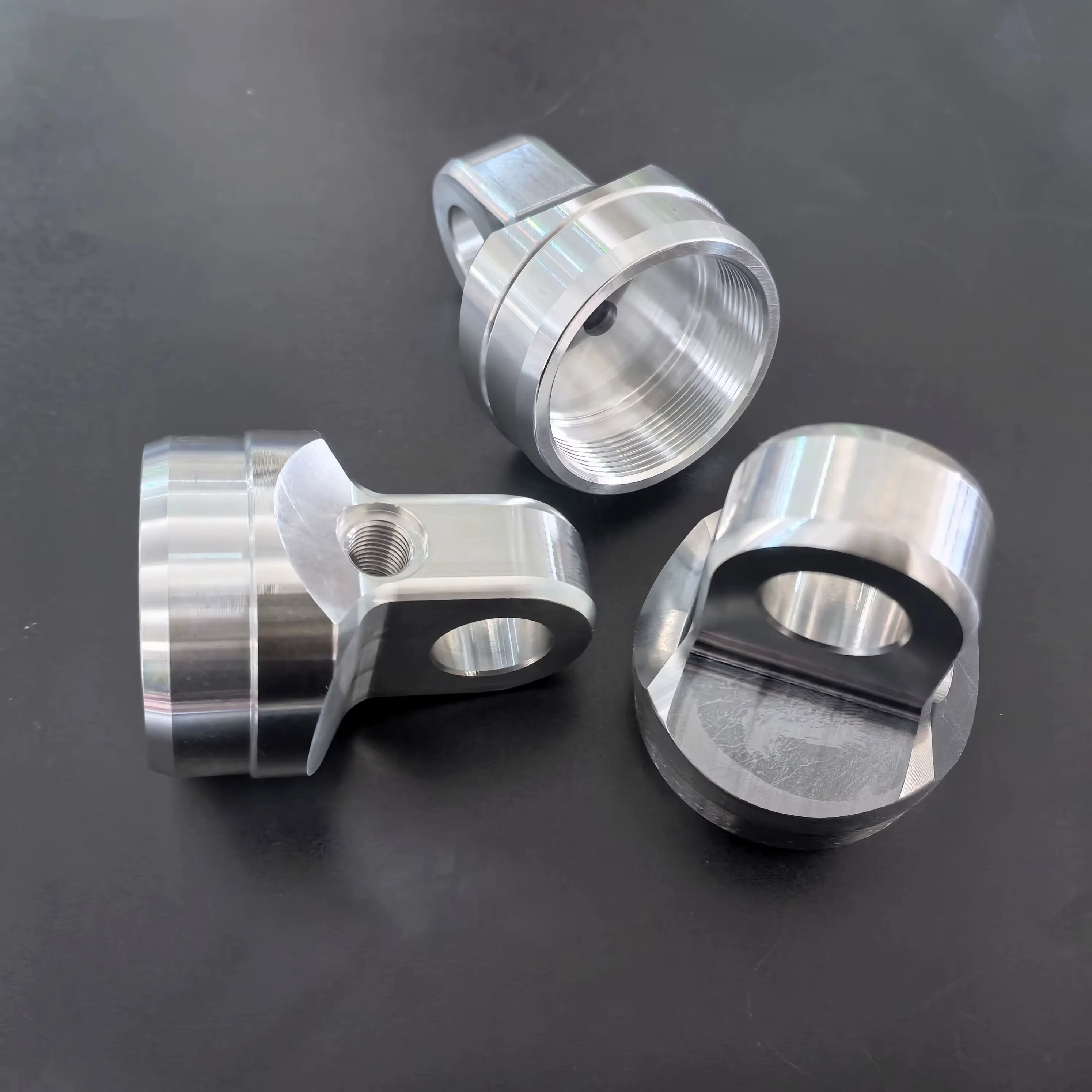
CNC machining can be a good choice when the project contains important dimensions, mating surfaces, holes or other features where dimensional control matters.
For example, in one of our vacuum casting projects, an ABS master pattern was produced by CNC machining, followed by silicone molding and vacuum casting using PX223 polyurethane material.
For complex parts, starting with a well-controlled master pattern can help reduce dimensional variation later in the process.
3D Printed Master Patterns
3D printing is also widely used because it can reduce lead time and cost, particularly for complex geometries.
However, the printing process, layer resolution, post-processing and dimensional accuracy of the printed master all need to be considered.
A lower-cost master is not always the lowest-cost solution if important dimensions later create assembly problems.
The right master process therefore depends on what the prototype needs to prove.
2. Silicone Mold Accuracy Matters
After the master is prepared, silicone is poured around it to create the production mold.
At this stage, several factors may affect dimensional consistency:
- Silicone material behavior
- Mold design
- Part geometry
- Wall thickness
- Position of the parting line
- Mold cutting
- Demolding method
- Repeated use of the mold
For a simple cosmetic cover, small dimensional variation may not create a problem.
For a component with repeated holes, mating surfaces or internal structures, the same variation may become much more important.
That is why critical dimensions should be identified before the mold is made, rather than discovered after the first batch is completed.
3. Mold Life Can Affect Part Consistency
A silicone mold is not a permanent production tool.
In our practical production experience, around 20 parts per mold is often a useful planning reference for many projects, but this should not be treated as a guaranteed number.
Actual mold life depends on factors such as:
- Part geometry
- Undercuts
- Casting material
- Mold complexity
- Demolding difficulty
- Surface requirements
- Required dimensional consistency
A relatively simple part may allow more castings.
A complicated part with deep features, thin sections or difficult demolding may require a new mold sooner.
For this reason, when a project moves from a few prototypes to several dozen parts, it is important to consider not only the cost per casting but also whether additional silicone molds may be required to maintain consistency.
4. Complex Geometry Makes Tolerance Control More Difficult
Not every dimension on a vacuum-cast component carries the same risk.
Features that deserve additional attention can include:
- Large overall dimensions
- Thin walls
- Deep cavities
- Long unsupported sections
- Multiple repeated holes
- Complex internal geometry
- Snap-fit features
- Mating surfaces
- Features close to the parting line
A part may look acceptable cosmetically while still having a dimensional problem at an important assembly point.
This is why we prefer to understand which dimensions are actually critical to function, rather than treating every dimension on a drawing in exactly the same way.
5. Mold Cutting Is Still a Skilled Manual Process
One part of vacuum casting that is sometimes overlooked is the manual work involved in opening the silicone mold.
After the silicone has cured around the master pattern, the mold must be carefully cut so that the master can be removed and the mold can later be used for casting.
For complicated geometries, this is skilled work.
The technician must consider where to create the split, how the part will be removed and how to avoid damaging important surfaces and features.
A poorly selected cut can contribute to visible parting lines, flash or additional finishing work.
This is one reason why vacuum casting quality depends not only on equipment and materials, but also on the experience of the people making and finishing the mold.
6. Trimming and Finishing Can Also Affect Critical Features
After demolding, vacuum-cast parts normally require manual finishing.
This may include:
- Removing gates and vents
- Trimming flash
- Cleaning the parting line
- Sanding
- Polishing
- Painting or other cosmetic finishing
For cosmetic surfaces, skilled finishing can significantly improve the appearance of the final part.
But finishing must be controlled carefully around functional features.
Removing too much material near an edge, hole, mating surface or locating feature may affect fit.
This becomes particularly important when a prototype must both look like a finished product and assemble like a functional component.
When Is Vacuum Casting Accurate Enough?
Vacuum casting can be an excellent process when the project requires:
- Prototype housings
- Electronic enclosures
- Medical device prototype components
- Automotive prototype components
- Covers and panels
- Functional plastic prototypes
- Low-volume end-use parts
- Small production batches before injection molding
However, it is important to distinguish between:
general dimensions and critical functional dimensions.
If a project contains extremely tight tolerances on specific features, CNC machining may sometimes be a better solution for those requirements.
In other cases, vacuum casting may still be appropriate if the critical areas are identified and evaluated before tooling begins.
The manufacturing process should follow the engineering requirement—not the other way around.
CNC Machining vs. Vacuum Casting for Tight-Tolerance Parts
The lowest piece price is not always the lowest project cost.
For example, imagine a customer needs 20 plastic components.
CNC machining may have a higher unit cost, while vacuum casting may reduce the cost per part.
But if the component contains several very tight mating dimensions, the decision becomes more complicated.
The right question is therefore not:
“Which process is cheaper?”
It is:
“Which process can meet the required function at the required quantity with an acceptable total cost?”
For some projects, that will be CNC machining.
For others, vacuum casting provides a better balance between cost, appearance and low-volume production.
And sometimes a project can use different manufacturing approaches during different development stages.
What Should You Provide When Requesting a Vacuum Casting Quote?
To evaluate a vacuum casting project properly, providing only a 3D model is sometimes not enough.
For a more useful manufacturing review, we recommend providing:
- 3D CAD file
- Required quantity
- Material or performance requirements
- 2D drawing if available
- Critical tolerances
- Important mating or assembly features
- Surface finish and color requirements
- Intended application of the parts
If certain dimensions affect assembly or function, identify them clearly.
This allows the manufacturer to evaluate those areas before the master and silicone mold are produced.
Need to Evaluate Vacuum Casting for Your Parts?
If you are deciding between CNC machining, 3D printing, vacuum casting or injection molding for a low-volume plastic component, the answer depends on more than quantity alone.
Part geometry, required material properties, cosmetic requirements, critical tolerances and future production volume should all be considered.
Send us your CAD files, required quantity, material requirements and critical tolerances.
YSBK Parts can review the project and help determine whether vacuum casting is suitable—or whether another manufacturing process would make more sense.