Aug 30, 2026CNC Machining Guides
Obsolete Machine Parts: Replacement Options for Industrial Equipment
OEM machine part discontinued? Compare sourcing, substitution, repair and custom manufacturing options for obsolete industrial equipment parts.
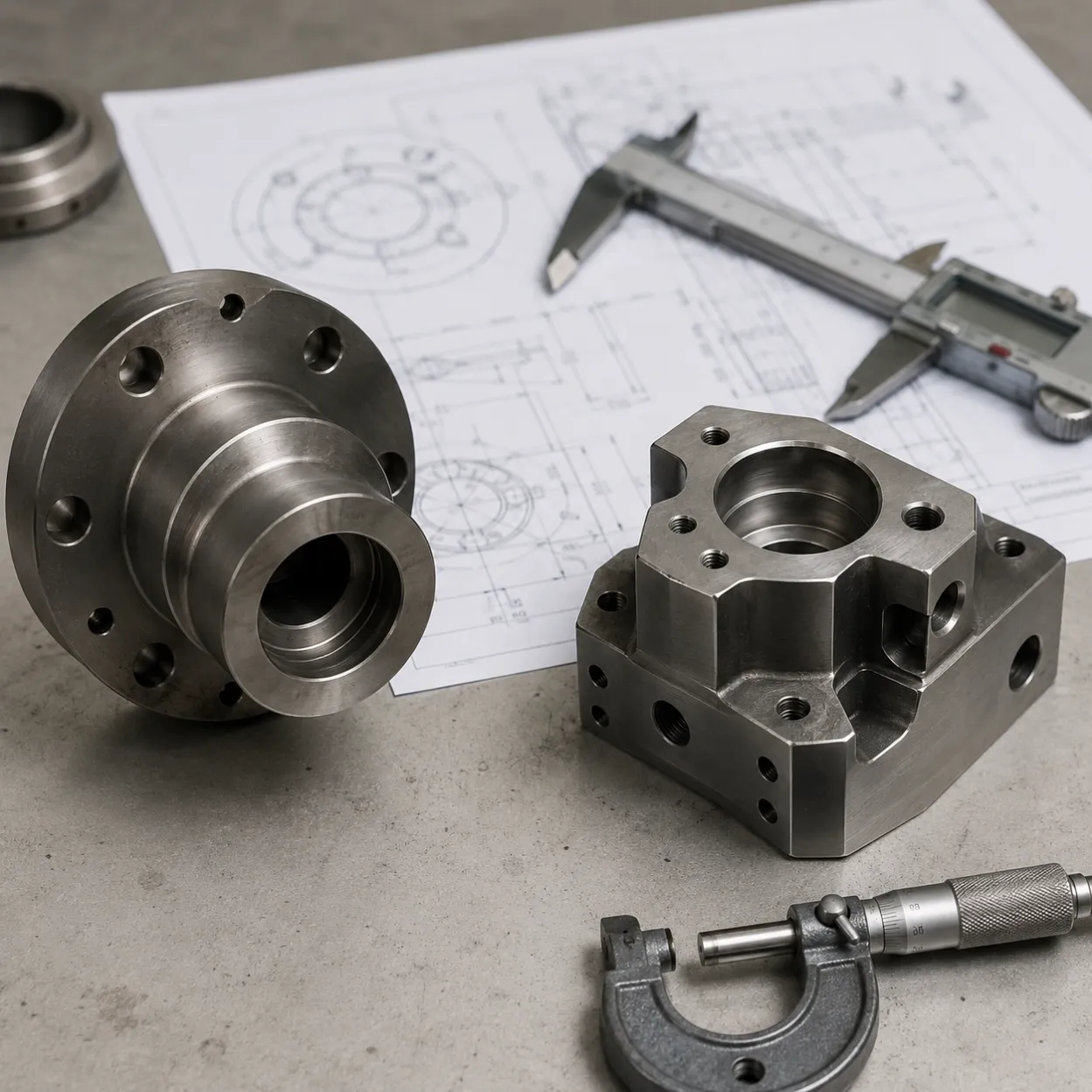
Industrial equipment often remains productive long after the OEM stops supporting individual components.
The problem usually becomes urgent when a worn or damaged part can no longer be ordered under its original part number. The machine may still have years of useful service ahead, but the normal supply route for one critical component has disappeared.
At that point, ordering a custom replacement is not automatically the first step.
The better approach is to determine whether the original part can still be sourced, whether a suitable equivalent exists, whether the existing component can be repaired, and only then whether custom manufacturing is the practical route.
For maintenance teams, equipment engineers and machine builders, making that decision in the right order can reduce both downtime and replacement risk.
Why the Part Becomes Obsolete Before the Machine
The service life of industrial equipment often exceeds the commercial life of its individual components.
An OEM may discontinue an older machine series, change suppliers or stop supporting a specific part number. The original manufacturer may no longer exist. In custom machinery, some components may have been designed specifically for one assembly and were never available as standard catalog parts.
This creates a familiar maintenance problem:
The equipment is still worth operating, but one of the parts needed to keep it running is no longer readily available.
Before replacing the machine—or commissioning a new part—it makes sense to work through the available replacement options.
1. Check Whether the Original Part Is Still Available
Start with the original part number, equipment documentation and previous purchasing records.
Even when a component is officially obsolete, remaining inventory may still exist through the OEM, an authorized distributor, an industrial surplus supplier or existing maintenance stock.
If the correct original part is available at a reasonable cost and lead time, it is often the lowest-risk solution.
This is especially true when the component contains proprietary features or requirements that are not fully documented. Reproducing such a part without reliable engineering information may introduce more risk than continuing to source the original.
Custom manufacturing is most useful when the established supply route no longer provides a practical solution.
2. Determine Whether a Standard Equivalent Can Be Used
If the original component is unavailable, the next question is whether a commercially available equivalent can perform the same function.
That assessment should go beyond overall dimensions.
Depending on the application, engineers may need to consider mounting interfaces, mating components, operating loads, motion, environmental exposure and other functional requirements.
A component that physically fits is not necessarily an acceptable replacement.
For standard bearings, fasteners, bushings and other commercially available components, however, a suitable equivalent may be simpler to source and easier to maintain in the future than a custom-made replacement.
If a standard component satisfies the actual engineering requirements, there is usually little reason to reproduce the obsolete part unnecessarily.
3. Evaluate Repair Before Replacing the Part
A damaged component does not always need to be replaced.
Depending on the material, failure mode and function of the affected features, repairing the existing part may restore the machine to service without creating a new component.
The decision should focus on whether the repair can reliably recover the features that matter to the assembly.
Wear on a non-critical surface, for example, is different from damage affecting a locating feature, alignment surface or functional interface.
Repair becomes less attractive when the original condition cannot be restored with confidence, the component has experienced repeated failures, or the same sourcing problem is likely to return during future maintenance.
In those situations, creating a controlled replacement may provide a more repeatable long-term solution.
4. When Custom Manufacturing Becomes a Practical Option
Custom manufacturing becomes worth evaluating when the normal replacement routes have been exhausted.
Typical situations include:
- the OEM part has been discontinued;
- remaining stock is unavailable or impractical to source;
- no suitable standard equivalent exists;
- repair cannot reliably restore the required function;
- the equipment still has sufficient value to remain in service;
- the component is a non-standard mechanical part;
- the requirement is for one part or a small quantity.
These conditions are common in older production equipment, custom machinery and automation systems containing machine-specific mechanical components.
The objective is not simply to copy the appearance of the old part.
A replacement has to reproduce the features necessary for the component to fit and function correctly within the existing assembly.
That distinction matters because once conventional sourcing, substitution and repair are no longer practical, the problem changes:
It is no longer primarily a spare-parts sourcing problem. It becomes an engineering and manufacturing problem.
5. Check Whether the Part Can Be Defined Reliably
Before moving to custom manufacturing, determine whether there is enough engineering information to define the required replacement.
Existing 2D drawings, CAD files, material specifications and known functional requirements provide the strongest starting point.
For older equipment, the documentation may not be complete. A legacy drawing may exist without a current CAD model. Some specifications may be missing, or the available drawing may represent an earlier revision.
Incomplete documentation does not automatically rule out a replacement project, but the missing information has to be identified rather than assumed.
Particular care is needed when the only physical reference is a worn or damaged component.
A diameter measured from a worn interface, for example, may not represent its original design condition. The same applies to damaged locating surfaces or features that have been modified during previous repairs.
The practical question is therefore not simply:
“Do we have the old part?”
It is:
“Do we have enough reliable information to define what the replacement needs to be?”
If the answer is yes—or the remaining uncertainties can be resolved—the project can move to a manufacturing review.
6. Think Beyond the Immediate Breakdown
An obsolete component can create a recurring maintenance problem.
If several machines use the same part, or if the component is subject to predictable wear, solving only the immediate failure may leave the same sourcing issue waiting for the next maintenance cycle.
Once a replacement has been successfully defined, maintaining controlled engineering documentation can make future sourcing more straightforward.
It may also be worth considering whether additional maintenance spares are justified, particularly when:
- several machines share the same component;
- the part has a known wear cycle;
- equipment downtime is costly;
- future OEM support is unlikely;
- producing another one-off part later would repeat the same qualification work.
This does not mean every obsolete component should be stocked in quantity. The decision should reflect failure risk, machine criticality and expected future demand.
For older custom equipment, however, solving the documentation problem can be almost as valuable as solving the immediate part shortage.
A Practical Decision Path for an Obsolete Machine Part
When an industrial machine part becomes difficult or impossible to source, the decision can usually be narrowed down in this order.
Can the correct OEM part still be sourced?
If yes, compare availability, lead time and cost before pursuing another route.
If not, is there a suitable standard equivalent?
If yes, verify the functional requirements and interfaces rather than relying only on physical size.
If not, can the existing component be repaired reliably?
If repair can restore the required function with acceptable risk and service life, it may remain the most practical option.
If not, is the equipment worth keeping in service?
For productive machinery with significant remaining value, replacing one unavailable mechanical component may be more practical than replacing the complete machine.
Finally, can the replacement be defined from reliable engineering information?
If sufficient drawings, CAD data or other engineering information exists, the project can move from obsolete-part sourcing to custom manufacturing review.
This sequence helps avoid unnecessary custom work while providing a practical route when the conventional supply chain can no longer support the equipment.
Have You Reached the Custom Manufacturing Stage?
If the OEM part is no longer available, no suitable standard replacement exists, repair is not practical, and the component can be defined from available engineering information, custom manufacturing may be the next step.
At that point, the question is no longer where to find the discontinued part, but whether a replacement can be manufactured reliably for the existing equipment.