CNC Machining Guides
Discontinued Machine Spare Parts: A Buyer’s Business Guide
Evaluate demand, compatibility, batch costs and inventory risk before stocking discontinued machine parts. Includes a cash-recovery example and a practical manufacturing RFQ.
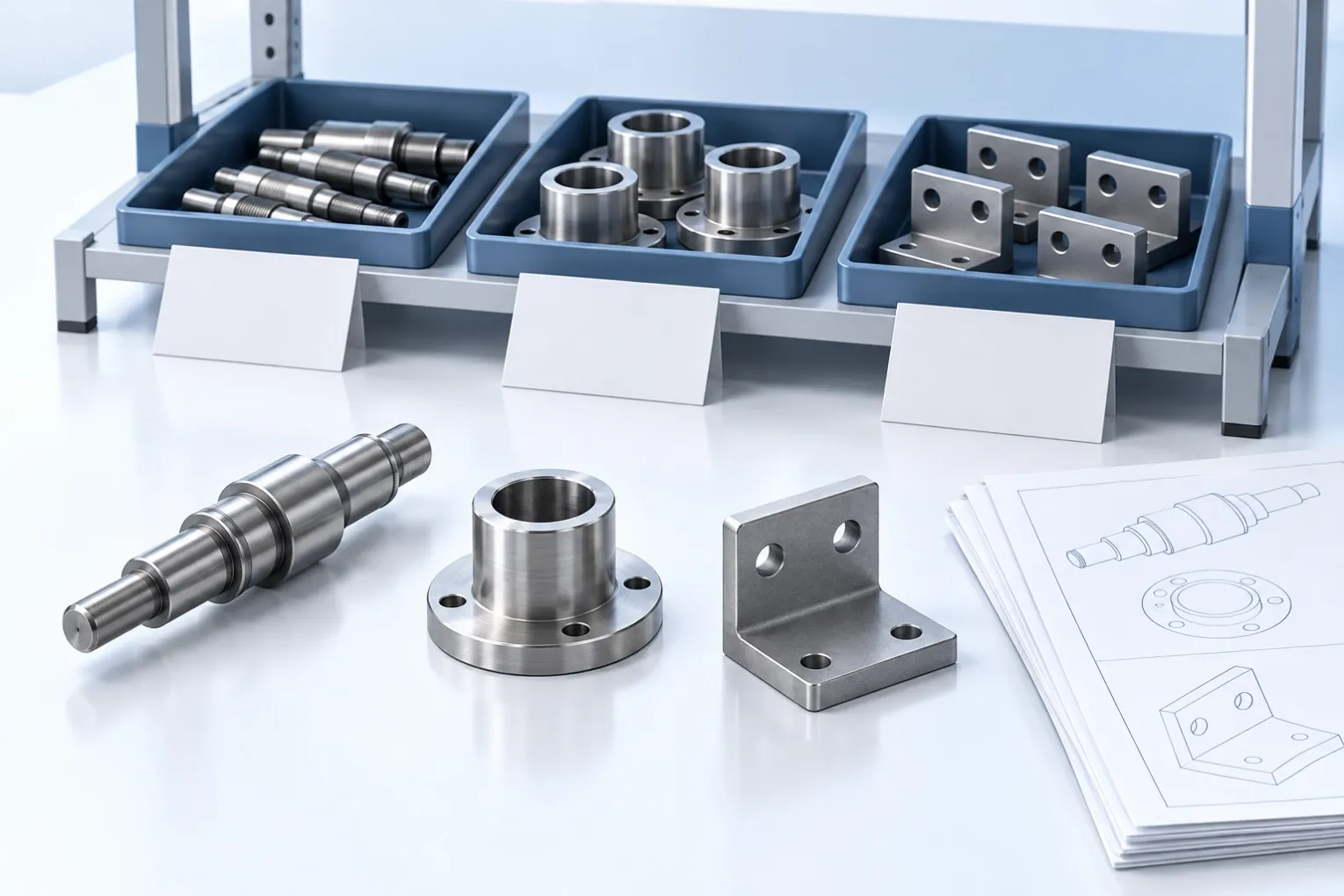
A discontinued component is a business opportunity only if you can define a usable replacement, verify demand and carry the stock risk. An unavailable OEM part is not automatically a profitable product. Start with one well-documented component and a small, justified purchasing decision before building a catalogue.
This guide is for traders, distributors and spare-parts sellers evaluating custom mechanical components. It addresses product selection and purchasing economics. For manufacturing, YSBK reviews custom replacement machine parts made to approved drawings. YSBK does not accept worn samples for measurement or provide reverse engineering or drawing reconstruction; your engineering team or a qualified provider must prepare and approve that documentation first.
Have a drawing-defined candidate? Request a manufacturing review with first-order and repeat quantities. Include the material, critical interfaces, inspection needs, destination and required timing.
Screen the Candidate Before Building Inventory
Question | Evidence worth collecting | Reason to pause |
|---|---|---|
Who needs this exact part? | Dated enquiries, actual purchases and identified machine variants | Several enquiries refer to different, incompatible parts |
Will the equipment remain in use? | Customer maintenance plans and known installed machines | A machine family is being retired or retrofitted |
Can you define a replacement? | Approved drawing, material and acceptance requirements | Only a worn sample or photograph, with unresolved design intent |
Can compatibility be validated? | Responsible customer and an agreed trial process | Nobody can approve the interfaces or test the intended application |
Does the economics survive slow sales? | Complete costs and conservative sell-through scenarios | Margin depends on every unit selling immediately |
There is no universal “three enquiries in a year” threshold. Record whether an enquiry became an order, whether it concerned the same revision and how much demand remains after one urgent repair. One customer with a defined recurring requirement can deserve review; many vague requests may not.
Count demand at the component and equipment-variant level. A shaft, sleeve and bracket from the same machine family can be three different buying decisions, with different wear rates, documentation and inventory risks.
Avoid Turning One Machine Family Into One Assumed Setup
Consolidating several components into one RFQ can simplify communication, packing or order administration. It does not prove the parts share programming, fixtures, material or inspection. A turned sleeve and a milled bracket may require different processes even when installed together.
Ask for line-item prices, setup charges where applicable, quantities and lead times for each drawing. Request any genuine shared-cost saving separately. Confirm whether splitting a shipment or ordering just one line changes the quotation. Do not promise your customer a family-wide discount before the manufacturing scope is known.
Compare Cash Exposure, Not Just Margin per Piece
The useful calculation begins with money committed to the batch. Include externally arranged engineering, samples and validation, manufacturing, agreed treatment and inspection, freight, applicable duties, packing and any selling or after-sales costs. Identify assumptions and avoid counting a charge twice.
Hypothetical arithmetic only—not YSBK prices, market demand or a profit forecast: consider 10 drawing-defined sleeves. Assume USD 200 of one-time preparation costs and USD 30 per manufactured unit. Batch cost is USD 500 before freight, tax, selling costs, returns and storage. Assume an illustrative selling price of USD 80 each.
Units sold from the 10-piece batch | Sales revenue | Sales revenue minus the USD 500 batch cost |
|---|---|---|
4 | USD 320 | –USD 180 |
7 | USD 560 | USD 60 |
10 | USD 800 | USD 300 |
The table is a cash-recovery comparison before the excluded costs, not accounting profit or gross margin. Unsold units remain inventory, not sales revenue. Recovering this simplified USD 500 takes seven sales at USD 80, but actual additional costs can move that point. The example does not establish a recommended order quantity or selling price.
Ask for your actual trial, first-batch and expected repeat quantities. Compare a smaller initial commitment with a lower unit price on a larger batch. Do not treat a low unit price as a saving until the likely sales, cash tied up and remaining stock are considered.
Example Candidate: A Sleeve With Two Machine Variants
Illustrative purchasing plan—not a completed YSBK customer project: a distributor receives requests for a flanged sleeve. Two machine variants look similar. An approximate 30 mm body diameter does not prove that their bores, lengths, material or installation fits match.
The distributor obtains separately approved requirements for each variant and assigns distinct internal part numbers. Their engineer identifies the critical interfaces and the validation required. The first manufacturing RFQ requests one trial component and separate prices for five and ten repeat pieces; those quantities illustrate comparison, not a demand forecast.
The designated customer evaluates the agreed first part before further stock is authorized. Any modification made during trial fitting must become an approved drawing change if it is to be repeated. No pass, restored machine or repeat sale is claimed here. The decision can still be to defer a candidate whose documentation or demand remains unclear.
Only have an old sample? Use the no-drawing replacement-part preparation guide for the engineering handoff. This article does not repeat that measurement workflow or offer it as a YSBK service.
Your Catalogue Needs Evidence Behind Compatibility
Keep the approved part number and revision, intended equipment variant, material/condition, relevant interfaces and validation record connected. Record who approved the design and the compatibility claim. Similar appearance is insufficient to advertise interchangeability across models.
Describe a custom replacement accurately; do not present it as an OEM-supplied item without a basis. Identify fitment limits and ask customers to verify the relevant machine configuration before ordering. A component inspection is separate from validating performance in the complete equipment.
After a complaint or a design change, distinguish affected stock from the approved revision before reselling or reordering. Agree the review and disposition process with the parties involved. Do not assume a manufacturing quotation includes your customer’s installation support, warranty commitments or machine-level approval.
Different Sellers Need Different Supplier Information
New entrants: start with a customer need you can document and a part you can define. Ask for missing RFQ information, separate engineering from manufacturing, and avoid purchasing stock merely because a supplier can make something similar.
Established traders and wholesalers: compare first/repeat quantities, drawing control, material availability, inspection scope and replenishment timing. Explain which orders are confirmed and which are forecasts. A forecast is not a production reservation or an unconditional purchase commitment.
E-commerce sellers: keep equipment variants separate, publish supportable compatibility information and plan how you will identify a wrong-part order. Include packaging, order processing and returns exposure in your comparison.
Local maintenance suppliers and store owners: organise part identification and customer approval before promising a delivery date. Your value can be correct selection, clear communication and controlled reorders; the factory’s part quotation does not automatically include those services.
What Adds Value Beyond a Cheap Quote?
A useful manufacturing response identifies the exact revision being quoted, missing requirements, material or treatment limitations, inspection feasibility and the proposed schedule. Ask for alternatives with the trade-off stated—for example, a different quantity or an approved design simplification—rather than a silent change to material or fit.
For YSBK, production requires approved requirements, with machining, secondary processing and inspection reviewed per RFQ. Reports and certificates are not automatic inclusions. Agree any first-part approval hold before authorizing the remaining quantity. Assembly fit, function and safety validation stay with the responsible customer team.
Once a candidate is validated, keep purchase instructions consistent. Review stock, fulfilled orders, complaints and changes to the installed equipment before reordering. No fixed inspection frequency or reorder quantity works for every component.
Send One Clear Candidate RFQ
Please review component [part number/revision] for [trial quantity], [first batch] and [possible reorder quantity]. Attached are the approved drawing and matching model where available. Material/condition, critical interfaces, finish and required inspection: [requirements]. Needed date and destination: [details]. Please identify feasibility issues, exclusions, preparation charges, line-item prices and the proposed schedule. We require [agreed first-part approval] before releasing the remaining batch. Forecast quantities are for comparison unless separately ordered.
Use the replacement-part RFQ checklist to organise the files. Review replacement components manufactured to approved drawings, then submit one documented candidate for a manufacturing quotation. The objective is a part you can specify, validate and reorder responsibly.
Questions Before Your First Stock Order
Does “discontinued” prove there is a market?
No. Confirm demand for the exact component, equipment variant and revision. Unavailability alone does not establish future sales.
Can several parts from one machine share one setup price?
Not necessarily. Ask for each part’s scope and any actual shared saving. Different geometry, material or inspection can require separate preparation.
Can I send a worn sample to YSBK for reconstruction?
No. Arrange measurement, engineering and approved documentation through your own team or a qualified provider before submitting the manufacturing RFQ.
Should I buy a large batch to lower the unit price?
Compare total cash exposure and slower-sales scenarios using actual quotations. A lower unit price can leave more cash in unsold inventory.
Does a successful trial establish compatibility with every machine variant?
No. Limit the claim to the evidence and configuration evaluated. Review other variants separately before expanding the catalogue.