CNC Machining Guides
How Much Do Custom CNC Machined Parts Cost? The Six Things That Set Your Price
What actually sets the price of custom CNC machined parts — setup versus per-unit, material, tolerances, finishing and quantity — and how to get an accurate, itemized quote without surprises.
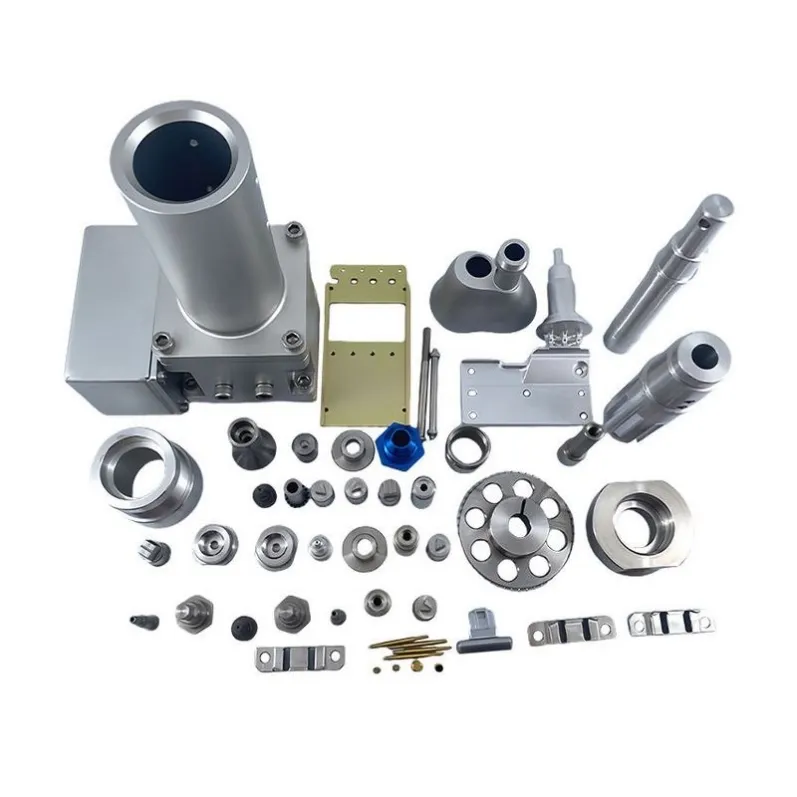
"How much for 100 of these?" is the first question every buyer asks, and the hardest to answer honestly — because the honest answer is: it depends on six things you can see before anyone quotes. This guide is for buyers who want to understand what actually sets the price of custom CNC machined parts, so the quotes you receive stop looking like opinions. It names no price list — a factory that quotes prices without reading your drawing is guessing, and you should not pay for guesses. What you take away is the price anatomy of a machined part, and the fastest route to an accurate, itemized number for yours.
Why "just give me a price" fails
- No two parts cost the same: the same 50×50×10 block can be a five-minute part or an afternoon, depending on what the drawing says.
- Setup and per-unit work get mixed up, so a one-piece price is compared against a hundred-piece price and nobody knows what they are looking at.
- Tolerance cost is invisible: two decimal places on every dimension can double the price, and the buyer never learns which dimension did it.
- Finishing is forgotten until after the batch — anodizing, plating and coating are separate processes with separate price tags.
- The quantity curve is misunderstood: prices do not scale linearly, and ordering "a few more" often costs surprisingly little extra.
- Vague RFQs get padded: a supplier who cannot see the scope protects himself in the price — and you pay for his uncertainty.
- The decision this guide owns: send a complete RFQ, receive an itemized quote, and negotiate the drivers — not the total.
Driver 1: Setup work versus per-unit work
Every part carries a one-time cost — programming, fixturing, first-article setup — and a per-piece cost — machine time, deburring, packing. The one-time cost is roughly constant whether you order one piece or fifty, which is why unit prices fall as quantity rises and why a single sample is never a linear preview of the batch. When you compare quotes, ask for these two lines separately; the quote comparison guide is built around exactly that split.
Driver 2: Material and stock size
The grade sets the base price; the stock size sets the waste. A part cut from standard plate or bar with modest offcuts is cheaper than the same part that forces a special size, and some grades simply cost more per kilo than others. Naming the exact grade and condition — as the aluminum ordering guide requires — is also what stops an "equivalent" substitution from changing both your part and your price.
Driver 3: Tolerances — you pay for every decimal
Standard shop tolerances ride along almost free. Every step tighter adds measurement, tooling care and scrap risk, and the cost lands on the features that carry the tight band. The discipline is simple: mark what mates, seals or locates; release the rest. The DFM review and the ISO 2768 guide show how to draw that line before it becomes a line item.
Driver 4: Geometry and machine time
Machine time is the raw material of the price. Deep pockets, thin walls, tight internal corners and many setups each add minutes — and minutes multiply by quantity. This is the driver you control most: a design that machines faster is a design that quotes lower, with no quality lost anywhere it matters.
Driver 5: Finishing
Anodizing, plating, powder coating and passivation are separate processes — often a separate truck ride — with their own minimums and their own time. A finish named at RFQ is priced into the order; a finish invented after delivery is a rush surcharge. The finishes guide helps you choose; the callout guides for anodizing show how to state it.
Driver 6: Inspection and documentation
Reports are real work: dimensional reports, material certificates, first articles — each adds inspection time and paperwork. Ask for what your risk actually requires, in the quote, not after it. The quality documents guide maps documents to risk so you pay for proof where it matters.
What a good quote looks like
Itemized: sample or first-article line, unit price at your quantity, finishing per part, fixture or programming if any, packaging, shipping basis. With those lines, three quotes become comparable — and the negotiation moves to the drivers: quantity break points, tolerance relaxation on non-critical features, material stock choices. The cost-reduction guide works the design side; this is the buying side of the same money.
New to this? You need three things before you ask
A drawing — even a simple one with dimensions, material and finish marked. A quantity — even if it is one; the minimum order here is a single piece, so you do not need a big order to deserve an accurate answer. And a destination — shipping shape changes the total. Send those three, and the questions that come back are the supplier earning the quote.
Worked example (illustrative)
The same 50 aluminum brackets, quoted twice by the same shop — first vaguely, then completely.
- Vague RFQ — "price for 100 brackets, aluminum" with a screenshot. One bundled number came back, finish and reports unmentioned. Unusable.
- Complete RFQ — revision-named drawing, 6061-T6 stated, quantity 50 with a sample first, anodize and dimensional report requested. Itemized quote returned.
- The itemized lines — setup, material, per-unit machining, anodize, reports: the buyer relaxed two non-functional tolerances and the unit price dropped at the next pass. Negotiated on drivers.
- Outcome — same shop, same part, better price with more proof included. Result.
The price did not change because the buyer haggled — it changed because the scope became visible.
The RFQ you can copy
Quote request: [quantity] × [part name], drawing rev [X] attached + STEP model. Material: [grade and condition]. Finish: [type or none]. Inspection: [reports required]. Ship to: [country]. Please itemize: setup/first-article, unit price at [quantity], finishing, packaging, shipping basis — and confirm material stock.
Send it to two or three suppliers on the same scope — that is how prices become answers instead of guesses.
Get your itemized quote
Send your drawing for an itemized quote — reviewed before the price, questions answered first, minimum order one piece. The full service scope is on the services page.
Record your RFQ completeness
Line | Your entry |
|---|---|
Drawing revision attached | |
Material grade and condition stated | |
Quantity and split (sample first?) | |
Finish stated | |
Inspection documents requested | |
Destination given | |
Itemized lines received? | |
Six drivers, one complete RFQ — that is how "how much" turns into a number you can plan a product around.